
Quick answer: Hand, foot and mouth disease is usually most contagious during the first week of illness. However, the viruses that cause HFMD may still spread for days or weeks after symptoms disappear. Viral shedding can continue even longer in stool. A child does not usually need to stay home for the full shedding period.
While reviewing questions from parents, I kept seeing the same worried message:
“My child feels better, but are they still contagious?”
I understand why this question confuses. One source may say HFMD is contagious for about a week. Another may say the virus can remain in stool for weeks or months.
Both statements can be true.
The peak contagious period, the viral-shedding period, and the school exclusion period are not the same thing.
HFMD is usually most contagious during the first week. The risk then falls as the fever ends, the child feels better, and the sores begin to heal. Still, the virus may remain in fluids from the nose and throat or in stool after visible symptoms are gone.
This guide explains the full hand, foot, and mouth contagious period in simple terms. It also covers how HFMD spreads, when a child may return to school, and which symptoms need medical advice.
How Long Is HFMD Contagious?
People with HFMD are usually most contagious during the first week they are sick.
They can still spread the virus for days or weeks after symptoms go away. Some people can also spread it without having any symptoms.
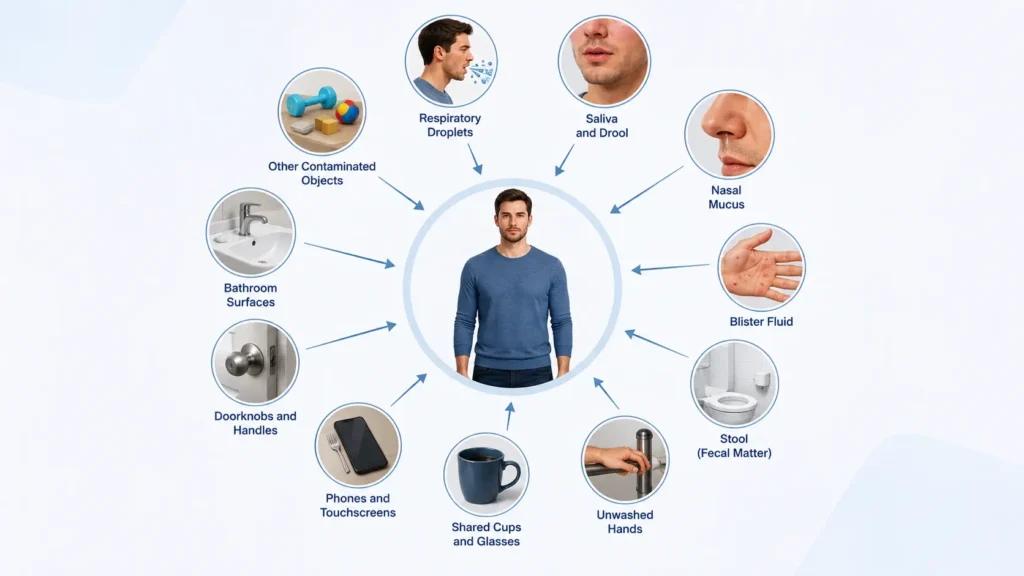
The virus may be found in:
- Saliva and drool
- Nasal mucus and throat secretions
- Fluid from blisters
- Stool
The American Academy of Pediatrics states that children may shed the virus from the respiratory tract for about one to three weeks. The virus may remain in stool for weeks to months after the infection starts.
This does not mean a recovered child is equally contagious for that whole period. The chance of spread is usually highest during active illness and becomes lower as symptoms improve.
HFMD Contagious-Period Timeline
The exact course can differ from one person to another. However, most cases follow a similar pattern.
| Stage | Usual timing | What parents should know |
|---|---|---|
| Exposure | Day 0 | The person comes into contact with a virus that causes HFMD. |
| Incubation period | About 3–6 days | There may be no symptoms yet. |
| Early illness | First days of symptoms | Fever, sore throat, poor appetite, or tiredness may begin. |
| Rash and mouth sores | Usually during the first week | This is often the highest-risk period for spreading HFMD. |
| Early recovery | Around days 7–10 | Symptoms usually improve, but some transmission risk can remain. |
| After recovery | Following weeks | Viral shedding may continue, especially in stool. |
Most people recover from the main illness in seven to 10 days. The rash or skin peeling may last longer without meaning the person is still at peak contagiousness.
When Is HFMD Most Contagious?
HFMD is usually most contagious during the first week after symptoms begin.
The illness often starts with mild, cold-like symptoms, such as:
- Fever
- Sore throat
- Runny nose
- Reduced appetite
- Tiredness
- Irritability in young children
Painful mouth sores and a rash may appear one or two days later. This means a child may already be spreading the virus before a parent sees the classic spots on the hands and feet.
People with mild symptoms or no obvious symptoms may also pass the virus to others.
When Is HFMD No Longer Contagious?
There is no exact day when every person with HFMD becomes completely noncontagious.
A person is usually less likely to spread the infection when:
- The fever is gone
- They feel well again
- Drooling is controlled
- Mouth pain has improved
- Blisters are dry or healing
- The first week has passed
However, the virus may still be present in fluids from the nose and throat or in stool.
This is why handwashing remains important after recovery, especially after diaper changes, toilet visits, or contact with saliva.
Viral shedding is not the same as peak contagiousness
Viral shedding means the virus is still leaving the body.
It does not mean the person is as contagious as they were during the first days of illness. The practical risk usually falls as symptoms improve, even though it may not reach zero right away.
How Contagious Is Hand, Foot and Mouth Disease?
HFMD is very contagious. It can spread quickly in places where young children share toys, bathrooms, classrooms, and eating areas.
Common outbreak settings include:
- Daycare centers
- Preschools
- Elementary schools
- Playgroups
- Summer camps
- Large households
HFMD is most common in children younger than 5, but older children and adults can also get it.
The chance of infection after one exposure cannot be predicted. Risk depends on how close the contact was, which body fluid was involved, the stage of illness, and hygiene practices.
Close contact with saliva, stool, nose and throat fluids, or fresh blister fluid creates more risk than simply being in the same building.
How Is HFMD Spread?
HFMD spreads through direct contact with an infected person or with contaminated objects.
Respiratory droplets and secretions
A person may release virus-containing droplets when they cough, sneeze, or talk.
The virus may also be present in saliva, drool, nasal mucus, and throat secretions. Close contact may allow those fluids to reach another person’s eyes, nose, or mouth.
The American Academy of Pediatrics describes these as larger, close-range droplets that usually fall rather than remaining in the air for long periods.
Blister fluid
Fluid inside HFMD blisters may contain the virus.
Do not intentionally break or squeeze the blisters. Wash your hands after helping a child clean or cover affected skin.
Stool and diaper changes
The fecal-oral route is an important way HFMD spreads.
The virus can move from stool to hands during diaper changes, toilet training, or bathroom cleaning. It may then spread to food, toys, faucets, handles, and other surfaces.
Another person may become infected after touching a contaminated object and then touching their eyes, nose, or mouth.
Shared and contaminated items
HFMD may spread through:
- Toys
- Cups and bottles
- Eating utensils
- Towels
- Toothbrushes
- Tables and countertops
- Doorknobs
- Faucet handles
- Bathroom surfaces
Regular cleaning is especially important while someone has active symptoms.
What Is the HFM Incubation Period?
The HFM incubation period is usually about three to six days.
The incubation period is the time between catching the virus and developing the first symptoms.
For example, a child exposed at daycare on Monday may not develop symptoms until Thursday, Friday, or the weekend.
Early symptoms may include fever, sore throat, runny nose, poor appetite, tiredness, or irritability. Mouth sores and a skin rash may appear later.
Can HFMD Spread Before the Rash Appears?
Yes, it may.
The illness can start with fever or mild cold-like symptoms. The mouth sores and rash often appear later. A person may therefore expose others before anyone realizes the illness is HFMD.
The viruses that cause HFMD can also be spread by people without symptoms.
Good hygiene should begin as soon as someone in the home becomes sick. Do not wait for visible blisters before cleaning shared items or avoiding shared cups.
Is HFMD Contagious After the Fever Is Gone?
Yes, it can be.
The end of the fever is a good sign, but it does not prove that viral shedding has stopped.
The virus may still be present in saliva, nasal secretions, blister fluid, and stool. Continue careful handwashing and avoid sharing cups, bottles, utensils, and towels.
Is HFMD Contagious After the Blisters Heal?
The risk from blister fluid should fall as the blisters dry and heal.
However, the person may still shed the virus through fluids from the nose and throat or through stool.
A fading rash is not a perfect test of contagiousness. Red, brown, or lighter marks may remain after the active rash improves. Some children also develop harmless peeling on their fingers or toes later.
When Can a Child Return to Daycare or School?
A child does not usually need to stay home until all viral shedding has ended.
According to the CDC, children with HFMD may generally attend school or childcare when they:
- Have no fever
- Feel well enough to participate
- Have no uncontrolled drooling from mouth sores
The American Academy of Pediatrics adds that exclusion may be needed if a child has many open blisters, needs more care than staff can safely provide, or meets another exclusion rule.
A school, daycare, or local health department may use stricter rules during an outbreak.
Keep a child home when:
- A fever is present
- The child feels too sick to join normal activities
- Mouth pain prevents normal drinking
- Drooling cannot be controlled
- The child needs more care than staff can safely provide
- A clinician recommends staying home
- The school or health department requires exclusion
The rash does not always need to disappear completely before the child returns. Fever, overall well-being, drooling, open blisters, and local policy are more useful factors.
When Can an Adult Return to Work?
Adults can also get HFMD. Some develop fever, painful mouth sores, and a rash. Others have mild symptoms or no clear symptoms.
There is no universal return-to-work rule for every job.
An adult should generally stay home while they have a fever, feel too sick to work, cannot manage their secretions, or cannot follow hygiene measures.
People who work in healthcare, childcare, or food service may need guidance from their employer, occupational health team, or healthcare provider.
Handwashing should continue after returning because viral shedding may remain.
How Long Is Coxsackie Contagious?
Coxsackievirus A16 is a common cause of HFMD. Coxsackievirus A6 and other non-polio enteroviruses can also cause the illness.
When a coxsackievirus causes HFMD, the pattern is similar:
- The first week is usually the most contagious
- Respiratory shedding may continue for one to three weeks
- Stool shedding may continue for weeks or months
Not every HFMD case is caused by the same virus. Routine cases are often diagnosed from symptoms rather than laboratory testing.
A person can also get HFMD more than once because several viruses can cause it.
Can Siblings Go to School After HFMD Exposure?
A healthy sibling usually does not need to stay home only because they were exposed.
Watch for symptoms during the next three to six days, including fever, sore throat, mouth pain, reduced appetite, or spots on the hands and feet.
During this period:
- Encourage frequent handwashing
- Do not share cups or utensils
- Clean shared toys
- Tell the school if symptoms develop
Local school rules may differ during an outbreak.
How to Prevent HFMD From Spreading at Home
It may not be possible to prevent every infection. A person can spread the virus before the rash appears or without clear symptoms.
Still, these steps can lower the risk.

Wash hands with soap and water.
Wash for at least 20 seconds, especially after:
- Changing diapers
- Helping with toilet use
- Touching saliva or mucus
- Cleaning affected skin
- Blowing a nose
- Coughing or sneezing
- Handling used tissues
- Preparing food
Cleaning shared objects
Focus on items that are touched often:
- Toys
- Doorknobs
- Faucet handles
- Tables
- Phones
- Remote controls
- Bathroom surfaces
Follow the directions on the cleaning or disinfecting product. Never mix cleaning chemicals.
Do not share personal items.
Keep cups, bottles, utensils, toothbrushes, towels, and washcloths separate during the illness.
Limit close contact
Avoid kissing, sharing food or drinks, and touching fresh blisters while the person is sick.
The CDC recommends frequent handwashing, cleaning shared objects, and limiting close contact to reduce HFMD transmission.
When to Contact a Healthcare Provider
Most people improve in seven to 10 days. However, painful mouth sores can make drinking difficult. Dehydration is the main concern.
Contact a healthcare provider if the child:
- Is younger than 6 months
- Cannot drink enough fluids
- Is urinating much less than usual
- Has a fever that does not improve within three days
- Has severe or worsening symptoms
- Has a weakened immune system
- Does not improve within 10 days
- Is unusually sleepy or difficult to wake
- Has a severe headache or stiff neck
Seek urgent medical care for breathing problems, confusion, severe weakness, or signs of serious dehydration.
Pregnant people who are concerned about an HFMD exposure should contact their healthcare provider for advice based on their medical history and stage of pregnancy.
Frequently Asked Questions
How long is HFM contagious?
HFM, more commonly called HFMD, is usually most contagious during the first week. The viruses that cause it may still spread for days or weeks after symptoms improve.
What is the usual hand foot mouth contagious period?
The highest-risk period is normally the first week of illness. Viral shedding may continue longer, especially in stool.
When is HFMD no longer contagious?
There is no exact day for everyone. The risk usually becomes lower after the first week and as fever, drooling, mouth sores, and blisters improve.
When does hand foot and mouth stop being contagious?
HFMD does not always stop being contagious on one fixed day. The chance of transmission usually decreases over time, but viral shedding can continue after visible symptoms disappear.
Is HFMD contagious without a fever?
Yes. Not everyone develops a fever. People with mild symptoms or no symptoms may still spread the viruses that cause HFMD.
Can HFMD spread through the air?
HFMD can spread through droplets released during close contact, coughing, sneezing, or talking. It also spreads through saliva, blister fluid, stool, and contaminated objects. It is better described as droplet and contact spread than as a long-range airborne infection.
Can adults spread HFMD to children?
Yes. Adults can become infected and pass the virus to others, sometimes without obvious symptoms.
Can you get HFMD twice?
Yes. Several enteroviruses can cause HFMD, so a past infection does not protect a person from every future infection.
Does the rash need to disappear before returning to school?
Not always. CDC guidance focuses on fever, the child’s ability to participate, and uncontrolled drooling. Open blisters, local policies, and outbreak rules may also affect the decision.
Conclusion
After checking the current medical guidance, I found that the safest answer is not one fixed number of days. It is a timeline.
HFMD is usually most contagious during the first week. The risk then falls as the fever ends, the child feels better, and the blisters heal. Viral shedding may continue after that, especially in stool.
I would not use the rash alone to decide whether a child is ready to return to school. I would look at the full picture. Is the fever gone? Can the child drink and join normal activities? Is drooling controlled? Are open blisters still a concern? What does the school or daycare require?
I would also keep careful handwashing in place after recovery. This matters most after diaper changes and toilet visits.
Those simple steps can protect the family without keeping a healthy child isolated for weeks.
Medical Disclaimer
This article provides general educational information. It does not diagnose illness and does not replace advice from a pediatrician or another qualified healthcare professional.