

A scratchy throat can quickly lead to questions. Is this the start of a cold? Will tomorrow be worse? How long will the congestion and cough last?
While researching this guide, I found that cold timelines can be confusing because some begin on the day of infection and others begin on the first day of symptoms. To keep this article clear, Day 1 means the first day you notice cold symptoms.
Most colds improve in about a week, but a runny nose or cough can last 14 days or longer. Symptoms often feel strongest early in the illness and then slowly improve.
Health note: This article provides general information only. It cannot diagnose an illness or replace advice from a qualified healthcare professional.
Common Cold Timeline at a Glance
The stages below show a typical pattern. They are not an exact medical schedule.
| Stage | Approximate timing | What you may notice |
|---|---|---|
| Exposure and incubation | Before symptoms | A respiratory virus enters the body and begins multiplying |
| Early stage | Days 1–3 | Scratchy throat, sneezing, runny nose, congestion and tiredness |
| Active stage | Days 3–7 | Cough and nasal symptoms remain before easing |
| Recovery stage | Days 7–10 | Energy returns and symptoms become milder |
| Lingering stage | Days 10–14 or longer | A mild cough or runny nose may remain |
What Is a Common Cold?
A common cold is a viral infection of the upper respiratory tract, including the nose, throat,t and upper airways.
More than 200 respiratory viruses can cause cold symptoms. Rhinoviruses are the most common cause in the United States.
A cold is not the same as flu, COVID-19, or RSV. These illnesses may begin with similar symptoms but can become more serious, especially in infants, older adults, and people with weakened immune systems or long-term health conditions.
Common Signs of a Cold
Cold symptoms usually develop gradually and may include:
- Runny or stuffy nose
- Sneezing
- Scratchy or sore throat
- Cough
- Headache
- Mild body aches
- Tiredness
- Watery eyes
- A low-grade fever in some people
The CDC notes that fever is usually low-grade in older children and adults.
Symptoms alone cannot always confirm a cold because flu, COVID-19, RSV, and other respiratory illnesses can look similar.
The Common Cold Timeline Day by Day
No single cold symptoms timeline applies to everyone. The pattern below explains what many people experience, but it is not a guaranteed schedule.
Before Day 1: Exposure and Incubation
A cold begins when a respiratory virus enters the body. These viruses can spread through droplets released during coughing or sneezing, close contact, or contaminated hands and surfaces.
The incubation period is the time between infection and the start of symptoms. Common cold symptoms usually begin two or three days after infection, although the timing depends on the virus.
Days 1–3: Early Symptoms and the Usual Peak
The first signs may be mild. You might notice a throat tickle, sneezing, a runny nose, or unusual tiredness.
Early symptoms may include:
- Scratchy or sore throat
- Sneezing
- Runny nose
- Mild congestion
- Headache
- Tiredness
- Mild body aches
Cold symptoms often reach their strongest point early. The CDC says symptoms usually peak within two to three days of infection. Because people rarely know exactly when they became infected, the worst day may seem to fall at different points in the symptom timeline.
Mucus may become thicker or change from clear to white, yellow, ow or green after a few days. This can happen during a normal viral cold and does not, by itself, mean antibiotics are needed.
Days 3–7: The Active Stage
During the active stage, a sore throat may begin to ease while congestion and coughing remain noticeable.
You may experience:
- Stuffy or runny nose
- Thick nasal mucus
- Cough or postnasal drip
- Mild headache
- Reduced energy
- Mild pressure around the nose or face
Symptoms can feel worse at certain times of day. Lying down may make drainage and coughing more noticeable. One difficult evening does not always mean the illness is becoming more serious.
Focus on the overall direction. A normal cold should begin moving from worsening to stable and then toward recovery.
Days 7–10: Recovery
Many people feel much better by the end of the first week.
Signs of recovery include less throat pain, reduced nasal drainage, easier breathing, better sleep, more energy, and a less frequent cough.
Recovery is not always a straight line. You may still have a difficult morning or feel tired after activity, even while the illness is improving.
Most colds get better in about a week. Contact a healthcare professional if symptoms become worse or do not improve after about 7 to 10 days.
Days 10–14: Lingering Symptoms
Can a cold last two weeks? Yes.
A runny nose and cough may continue for 14 days or longer, even after your energy and appetite return.
A lingering cough may happen because the throat and airways remain irritated. Postnasal drip can also trigger coughing.
These symptoms should gradually become less severe. Seek medical advice if a cough worsens, affects breathing, comes with chest pain, or is not showing signs of improvement.
How Long Does Each Cold Symptom Last?
There is no exact duration for every symptom.
| Symptom | When it often appears | Typical pattern |
| Scratchy or sore throat | Early | Often one of the first symptoms to improve |
| Sneezing | Early | Often strongest during the first few days |
| Runny nose | Early | May last 10–14 days or longer |
| Nasal congestion | Early to middle | May remain after the sore throat improves |
| Headache | Early to middle | Often improves as congestion decreases |
| Mild body aches | Early | Usually less intense than flu-related aches |
| Cough | Early or middle | May continue after other symptoms improve |
| Tiredness | Throughout | Should gradually improve during recovery |
| Low-grade fever | Usually early | More common in children than adults |
MedlinePlus says common cold symptoms may last from 2 to 14 days, with a cough and runny nose sometimes lasting longer.
What Is the Worst Day of a Common Cold?
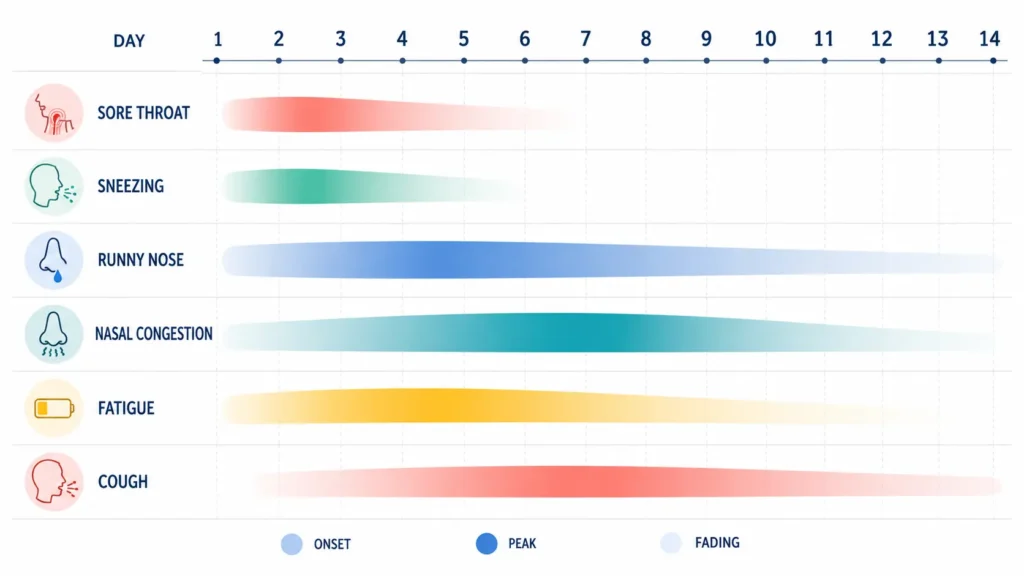
The worst day of a common cold is usually early, often within the first two or three days.
This is when congestion, sneezing, sore throat, headache, and tiredness may feel strongest. Some people reach their peak later because the virus and symptom pattern can vary.
Instead of expecting one exact worst day, watch for the point when symptoms stop becoming stronger and begin to improve.
Signs Your Cold Is Getting Better
Signs your cold is getting better may include:
- More energy
- Less throat pain
- Less sneezing and nasal drainage
- Easier breathing
- A less frequent cough
- Better sleep
- A returning appetite
- Symptoms becoming milder overall
Mucus color alone is not a reliable recovery test. Pay more attention to your energy, breathing, pain, and overall symptom pattern.
Signs Your Cold Is Getting Worse
Possible signs your cold is getting worse include:
- Trouble breathing or fast breathing
- Dehydration
- Fever lasting longer than four days
- Symptoms lasting more than 10 days without improvement
- Fever or cough improving and then returning
- Wheezing
- Severe headache
- Strong ear, facial, all, or sinus pain
- A long-term health condition becoming worse
The CDC advises seeking medical care for breathing difficulty, dehydration, a fever lasting longer than four days, symptoms that do not improve after 10 days, or symptoms that improve and then return or worsen.
Contact a healthcare professional about any symptom that is severe, unusual, al or concerning.
Why Did My Cold Improve and Then Get Worse?
Recovery can vary from day to day. Feeling tired one evening does not always mean a complication has developed.
A clear return of strong symptoms is different. Contact a healthcare professional if your fever returns, your cough becomes much worse, you develop shortness of breath, or you experience severe ear or facial pain.
Respiratory infections can sometimes lead to ear infections, sinus infections, bronchitis, pneumonia, or worsening asthma.
How Long Is a Cold Contagious?
There is no single contagious period for every cold because many viruses can cause cold symptoms. It is safest to assume you may spread the virus while you have active symptoms, especially early in the illness.
Reduce the risk by staying home while clearly sick, covering coughs and sneezes, washing your hands, improving indoor airflow,w and avoiding close contact with high-risk people.
Current CDC guidance says you may return to normal activities when symptoms have been improving overall for at least 24 hours and you have not had a fever without fever-reducing medicine for at least 24 hours. Extra precautions are recommended for the next five days because some transmission risk may remain.
Schools and workplaces may have their own policies.
How Long Does a Cold Last in Adults?
Many adults improve in about a week. A cough or runny nose may remain for 10 to 14 days or longer.
Symptoms may require more attention in adults who smoke, have asthma or another lung condition, have a weakened immune system, or develop a complication.
Adults in the United States have an average of two to three colds each year, while children often have more.
How Long Do Colds Last in Children?
A child’s cold may also last up to two weeks. A cough or runny nose can remain after energy and appetite improve.
The FDA does not recommend over-the-counter cough-and-cold medicines for children younger than 2 because they may cause serious side effects. Manufacturers label many products “Do not use in children under 4 years of age.”
Always read the label and ask a pediatrician or pharmacist when you are unsure what is safe.
Contact a healthcare professional if a child has difficulty breathing, blue or gray lips, dehydration, severe sleepiness, poor feeding,g or symptoms that are getting worse. The FDA advises contacting a doctor for a temperature of 100.4°F or higher in an infant aged 2 months or younger.
Common Cold vs. Flu and COVID-19
A cold, flu, and COVID-19 can share symptoms, including cough, sore throat, headache, tiredness, and a runny or stuffy nose.
Flu often begins more suddenly and is more likely to cause fever, chills, stronger body aches, and heavy fatigue. However, symptoms alone cannot always identify the infection.
The CDC recommends testing when you have cold-like symptoms and suspect flu or COVID-19, especially if you have a higher risk of serious illness. Antiviral treatments for flu and COVID-19 work best when started early.
What Helps During a Cold?

There is no cure for the common cold, but simple care may help:
- Rest and drink fluids.
- Use saline nasal spray or drops.
- Use a clean, cool-mist humidifier.
- Try honey for a cough if the person is at least 1 year old.
- Read OTC medicine labels carefully.
- Ask a healthcare professional before giving medicine to a child or combining products.
Never give honey to a baby younger than 12 months because of the risk of infant botulism.
Pain relievers and some cold medicines may reduce symptoms for a short time, but they do not cure the infection. Antibiotics do not work against the viruses that cause colds.
When Should You See a Doctor?
Seek medical care if you or your child has:
- Trouble breathing or fast breathing
- Chest pain
- Dehydration
- Fever lasting longer than four days
- Symptoms lasting more than 10 days without improvement
- Symptoms that improve and then return or worsen
- Severe ear, throat, head or sinus pain
- Wheezing
- A long-term health condition that becomes worse
People at higher risk of serious respiratory illness should contact a healthcare professional early, even when symptoms seem mild.
Seek emergency care for severe breathing difficulty, blue or gray lips, confusion, loss of consciousness, or severe chest pain.
Frequently Asked Questions
How long does a cold last?
Most colds improve in about a week. A cough or runny nose may last for 10 to 14 days or longer.
How long do colds last in adults?
Many adults feel better within 7 to 10 days, although some symptoms may continue into the second week.
What are the first signs of a cold?
The first signs may include a scratchy throat, sneezing, a runny nose, mild congestion, and tiredness.
What is the worst day of a common cold?
The worst day is often early in the illness, commonly within the first two or three days. The timing varies.
Can a cold last two weeks?
Yes. A cough or runny nose can last for 14 days or longer, but it should gradually improve.
Does green mucus mean I need antibiotics?
No. Yellow or green mucus can occur during a viral cold. Color alone does not show that the infection is bacterial.
When can I return to work or school?
You can generally return when symptoms have been improving overall for at least 24 hours, and you have been fever-free without medicine for at least 24 hours. Take added precautions for the next five days and follow local policies.
Conclusion
After reviewing current public-health guidance, I found that the best way to understand a cold timeline is to watch the overall direction of the illness instead of expecting every symptom to follow an exact calendar.
A typical cold begins with a scratchy throat, sneezing, or a runny nose. Symptoms often feel strongest early and then slowly improve. Many people feel better in about a week, although a mild cough or runny nose may last longer.
Rest, drink enough fluids,s and give your body time to recover. Contact a healthcare professional if you develop breathing trouble, dehydration, returning fever, or symptoms that are not improving.
Understanding the common cold timeline can reduce uncertainty. More importantly, knowing the warning signs can help you seek care at the right time.