
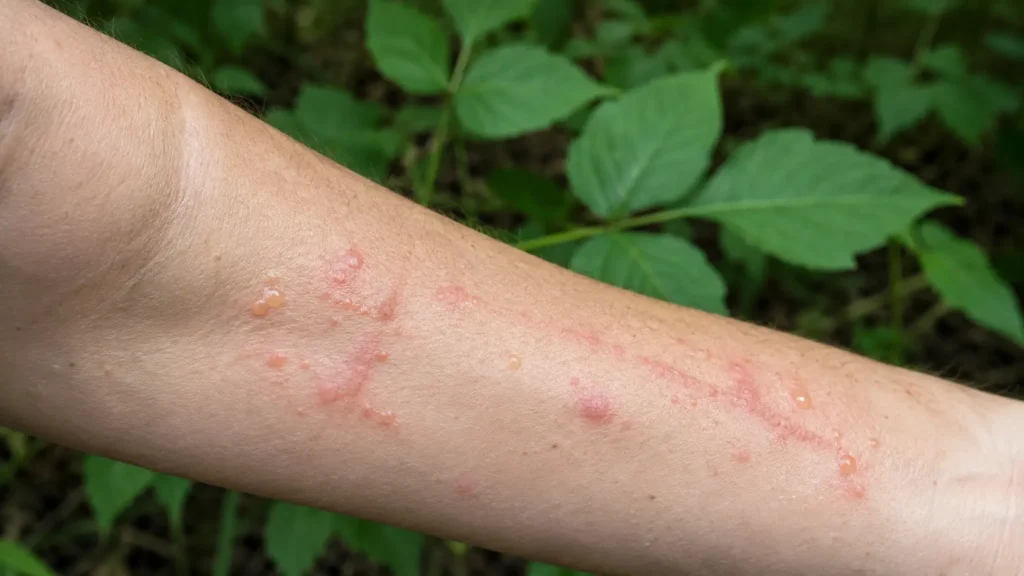
When I had a poison ivy rash, I learned that its appearance can change a lot during recovery. One area may have fresh blisters while another is already dry and peeling. This can make it hard to know whether the rash is healing or still spreading.
So, what does poison ivy look like as it heals?
A poison ivy rash usually starts with intense itching, swelling, and raised bumps. Small, fluid-filled blisters may appear next. Some blisters break open and release clear fluid. They later dry, form a crust, flatten, and fade. Most cases clear within two to three weeks, but the exact poison ivy timeline varies. A first reaction may take longer to appear, and different skin areas may heal at different speeds.
This guide explains the poison ivy rash stages, from early symptoms through the final poison ivy healing stages. It also covers blister fluid, delayed patches, signs of healing, possible infection, and when to seek medical care.
Poison Ivy Healing Timeline at a Glance
The stages below are approximate. A poison ivy rash does not follow the same schedule in every person.
| Stage | What the rash may look like | What you may feel |
|---|---|---|
| After exposure | Skin may still look normal | Usually no immediate symptoms |
| Early rash | Small bumps, swelling, patches, or streaks | Itching, tingling, or burning |
| Active rash | Raised bumps and fluid-filled blisters | Strong itching, tightness, or soreness |
| Oozing stage | Open blisters and clear fluid | Itching, stinging, or tenderness |
| Crusting stage | Dry blisters, thin crusts, and flatter patches | Itching begins to decrease |
| Healing stage | Peeling, fading bumps, and temporary discoloration | Mild or occasional itching |
| After healing | Flat skin that may remain darker or lighter | Usually no active itching |
People who have reacted to poison ivy, poison oak, or poison sumac before often develop symptoms within four to 48 hours. A person who has never reacted before may not develop a visible rash for two to three weeks. Once the rash appears, it commonly clears in about two to three weeks.
What Causes a Poison Ivy Rash?
Poison ivy contains a sticky plant oil called urushiol. The same oil is found in poison oak and poison sumac.
When urushiol touches the skin, it can trigger an immune reaction called allergic contact dermatitis. The rash may result from direct contact with the plant or indirect contact with oil left on:
- Clothing
- Shoes
- Gardening tools
- Outdoor equipment
- Pet fur
- Unwashed skin
- Items handled after plant exposure
Urushiol is sticky and can remain on unwashed objects. Touching a contaminated item can cause a new reaction, even after the original rash has started healing.
What Does Poison Ivy Look Like?
A typical poison ivy rash may include:
- Intense itching
- Raised bumps
- Swelling
- Inflamed patches
- Straight or curved streaks
- Groups of small blisters
- Larger fluid-filled blisters
- Oozing
- Crusting
- Dry or peeling skin
The rash often appears in lines because a leaf or stem brushed across the skin. Oil transferred from hands, clothing, tools, or pet fur may cause a more scattered pattern.
The amount of urushiol and the person’s sensitivity can affect the rash. One person may develop a few small patches, while another may have severe swelling and widespread blisters.
What Early Poison Ivy Rash Pictures May Show
Early poison ivy rash pictures often show:
- Small itchy bumps
- Thin lines or streaks
- Mild swelling
- Uneven patches
- Tiny fluid-filled blisters
- Irritated skin where contact occurred
Pictures can help you understand the general appearance, but they cannot confirm the diagnosis. Eczema, insect bites, shingles, and other forms of contact dermatitis may cause similar bumps or blisters.
Exposure history is an important clue. An itchy, line-shaped rash after hiking, gardening, landscaping, or yard work may suggest poison ivy.
Poison Ivy on Different Skin Tones
On lighter skin, the rash often looks pink or red. On darker skin, it may appear dark brown, violet, or grayish. Raised texture, swelling, streaks, and blisters may be easier to notice than a change in color.
After the active rash heals, the area may remain darker or lighter for some time. This temporary discoloration does not always mean that the rash is still active.
Rarely, poison ivy causes black spots or streaks that look like black lacquer. This is called black-spot poison-ivy dermatitis. Unexplained black marks should be checked by a healthcare professional because other conditions can cause a similar appearance.
Poison Ivy Rash Stages
These are common stages rather than strict medical phases. Different areas can be at different stages at the same time.
Stage 1: Exposure Before the Rash Appears
Right after exposure, the skin may look and feel normal. Urushiol may still be present even though there is no visible rash.
Wash exposed skin as soon as possible with soap and water. Rinse well and clean beneath the fingernails. Also wash clothing, shoes, gloves, tools, and other items that may carry the oil.
Prompt washing may remove some urushiol before it is fully absorbed. Wear protective gloves when cleaning possibly contaminated items or pets.
Never burn poison ivy, poison oak, or poison sumac. Smoke from these plants can carry urushiol and irritate the airways and lungs.
Stage 2: Early Itching, Swelling, and Bumps
Intense itching is often the first noticeable symptom. The skin may begin itching before the rash is easy to see.
Early changes can include:
- Mild swelling
- Small raised bumps
- Inflamed patches
- Thin streaks
- Tiny blisters
- Burning or tingling
A previous reaction often develops within four to 48 hours. A first reaction can take much longer to appear.
Stage 3: Active Rash and Poison Ivy Blisters
During the active stage, the bumps may become larger and more inflamed. Small poison ivy blisters can form alone, in groups, or along a streak.
The blisters may be:
- Small and tightly grouped
- Large and swollen
- Surrounded by inflamed skin
- Arranged in lines
- Filled with clear or pale fluid
This is often the most uncomfortable stage. The skin may feel intensely itchy, tight, warm, or sore.
Do not deliberately pop the blisters. If one opens on its own, leave the loose skin in place. It protects the raw skin underneath and may reduce the risk of infection.
Stage 4: Oozing and Weeping
Some blisters break open and release clear fluid. The area may look wet, shiny, or raw.
The fluid inside poison ivy blisters does not contain urushiol. It cannot spread the rash to another body part or another person.
Open blisters can still become infected if the skin is scratched or damaged. Keep the area clean and avoid picking at it.
Stage 5: Crusting and Drying
As the reaction begins to settle, the blisters dry and form thin crusts.
You may notice:
- Less leaking fluid
- Dry crusts
- Flatter bumps
- Less swelling
- Milder itching
- Dry or tight skin
Dry crusting can be part of normal healing. However, pus, increasing warmth, worsening pain, or tender yellow scabs may suggest an infection.
Stage 6: Peeling, Fading, and Skin Repair
During the final poison ivy healing stages, the skin may become dry, flaky, or temporarily discolored.
Signs of improvement include:
- No new blisters
- Existing blisters drying
- Raised bumps becoming flatter
- Swelling decreasing
- Itching becoming less intense
- Crusts falling away naturally
- Skin peeling or becoming smoother
Most rashes clear in two to three weeks. A first reaction may last 21 days or longer.
How to Tell if Poison Ivy Is Healing
The clearest sign of healing is steady improvement. The rash should become drier, flatter, and less itchy.
Common signs that poison ivy is healing include:
- New blisters have stopped appearing
- Older blisters are drying
- Swelling is going down
- Itching is less severe
- Raised areas are flattening
- Clear fluid has dried into a crust
- The skin is peeling
- The rash is slowly fading
One area may heal before another. This does not always mean that the poison ivy rash is spreading.
Why Does Poison Ivy Look Like It Is Spreading?
Poison ivy rash spreading is often caused by delayed reactions rather than movement of the rash under the skin.
New patches may appear because:
- Different areas received different amounts of urushiol.
- Some skin areas absorbed the oil faster than others.
- Urushiol remained on clothing, tools, shoes, or pet fur.
- Oil was trapped beneath the fingernails.
- A second exposure occurred.
Skin exposed to more oil may react first. Areas exposed to smaller amounts may react later, making the rash look as though it is spreading.
Is Poison Ivy Contagious?
An established poison ivy rash is not contagious.
You cannot catch it by:
- Touching the rash after the urushiol is gone
- Touching dried blisters
- Contacting blister fluid
- Sharing a room with someone who has the rash
You can develop a rash by touching urushiol that remains on unwashed skin, clothing, tools, shoes, or pet fur.
Normal Healing Versus Possible Infection
Oozing does not always mean that a poison ivy rash is infected. Clear blister fluid is common. The direction of the symptoms is more important.
| Possible normal healing | Possible infection |
| Clear or pale blister fluid | Thick, cloudy fluid or pus |
| Blisters drying and flattening | Increasing swelling |
| Itching slowly improving | Worsening pain |
| Thin, dry crusts | Tender or soft yellow scabs |
| Mild peeling | Increasing warmth |
| No fever | Fever |
| Rash slowly fading | Rash becoming more inflamed |
Contact a healthcare professional if the area develops pus, worsening pain, increasing tenderness, unusual warmth, fever, or symptoms that are getting worse instead of better.
How to Treat a Mild Poison Ivy Rash
A mild rash on a small area can often be treated at home when you are certain poison ivy, poison oak, or poison sumac caused it. An unexplained blistering rash should be assessed by a healthcare professional.
Wash Possible Sources of Urushiol
Wash exposed skin promptly with soap and water. Clean beneath the fingernails.
Also wash clothing, gloves, shoes, gardening tools, outdoor equipment, and pets that may have contacted the plant.
Use a Cool Compress
Place a clean, cool, damp cloth over the itchy skin. A cool compress may reduce itching and discomfort.
Do not place ice directly on the skin.
Use Calamine or Hydrocortisone
Calamine lotion may help reduce itching and dry oozing areas.
An over-the-counter hydrocortisone product may help a mild rash. Follow the label directions. Ask a healthcare professional before using it near the eyes, on the face, on broken skin, or on sensitive areas.
Take a Cool Bath
A short bath with colloidal oatmeal or baking soda may soothe the skin. A cool shower may also help.
Avoid very hot water because heat may make the itching feel worse.
Avoid Scratching
Scratching can break the skin and allow bacteria to enter. Keep the fingernails short and avoid picking at blisters or crusts.
A healthcare professional may prescribe an oral corticosteroid if the rash is widespread or causes many blisters. Antibiotics may be needed if a bacterial infection develops. Do not use leftover prescription medicines.
When to Contact a Healthcare Professional
Seek medical advice if:
- The rash is severe or widespread
- Swelling continues to increase
- The rash affects the eyes, mouth, face, or genitals
- You have many large blisters
- The skin releases pus
- Pain, warmth, or tenderness is getting worse
- You develop a fever
- The itching prevents sleep
- The rash is not improving within a few weeks
- You are unsure what caused the rash
Seek emergency care for difficulty breathing, trouble swallowing, severe facial swelling, or breathing symptoms after exposure to smoke from burning poison ivy.
Poison Oak Rash Stages and Poison Sumac Rash Stages
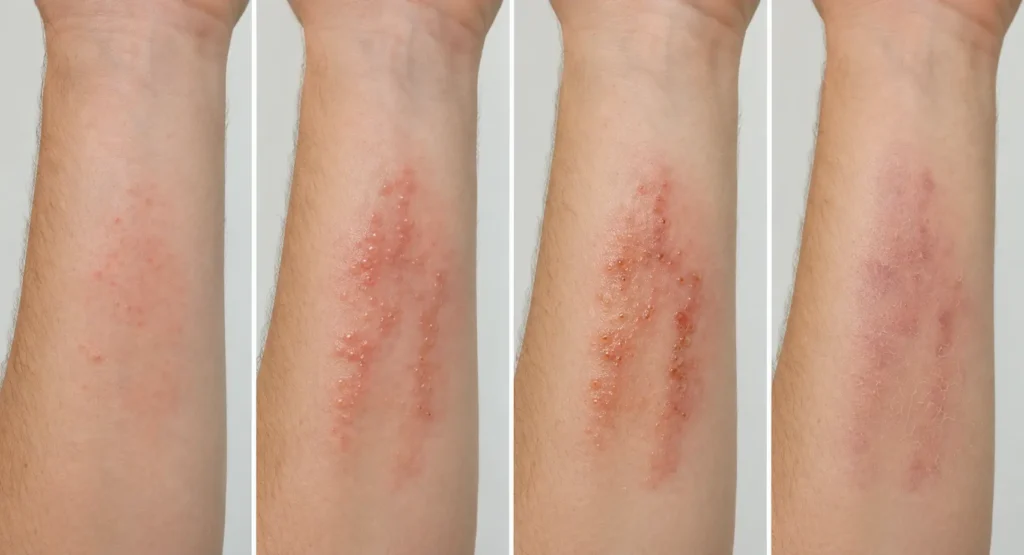
Poison ivy, poison oak, and poison sumac all contain urushiol. Their rashes usually follow the same pattern:
- Itching and swelling
- Raised bumps
- Blister formation
- Oozing
- Crusting
- Peeling and fading
For this reason, poison oak rash stages and poison sumac rash stages may look almost identical to poison ivy rash stages. It is often not possible to identify the plant by examining the rash alone.
Frequently Asked Questions
How long does a poison ivy rash last?
Most cases clear within two to three weeks. A first reaction may last 21 days or longer.
What is usually the worst stage?
The active blistering stage is often the most uncomfortable because itching, swelling, and inflammation may be strongest.
How do I know when poison ivy is healing?
The rash is likely healing when new blisters stop appearing, older blisters dry, swelling decreases, and itching becomes milder.
Can poison ivy blisters spread the rash?
No. The fluid inside the blisters does not contain urushiol and cannot spread the rash.
Why are new bumps appearing after several days?
Different skin areas may react at different times. New bumps can also result from contact with urushiol left on clothing, shoes, tools, or pet fur.
Can scratching spread poison ivy?
Scratching does not spread an established rash unless urushiol remains on the skin or under the fingernails. However, scratching can damage the skin and cause an infection.
Should I pop poison ivy blisters?
No. Leave the blisters alone. If one opens naturally, do not remove the skin covering it.
Does poison ivy leave scars?
Most cases heal without permanent scars. Scratching, infection, and deeper skin damage may increase the risk of a lasting mark. Temporary discoloration can remain after the active rash clears.
Can poison ivy return after it heals?
The same healed rash does not usually restart. A new rash may result from another exposure or contact with urushiol on an unwashed item.
Can I diagnose poison ivy from a picture?
No. A picture may suggest poison ivy, but it cannot confirm the cause. Other skin conditions may cause similar bumps, streaks, itching, or blisters.
Conclusion
When I had poison ivy, I learned that the changing appearance can make recovery seem uncertain. Fresh blisters, dry patches, and peeling skin may all be present at the same time.
The main signs of healing are fewer new blisters, less swelling, milder itching, flatter bumps, and drier skin. Clear blister fluid does not spread the rash. New patches are more often caused by delayed reactions or fresh contact with urushiol.
My experience helps me understand why people worry about each new change, but appearance alone cannot confirm a diagnosis. I would seek medical advice for a rash that becomes severe, widespread, painful, infected, or affects a sensitive part of the body.