
Medical disclaimer: This article is for general information only. It cannot diagnose food poisoning or replace advice from a qualified healthcare professional. Seek medical care for severe symptoms, dehydration, bloody diarrhea, neurological symptoms, or illness in someone at higher risk.
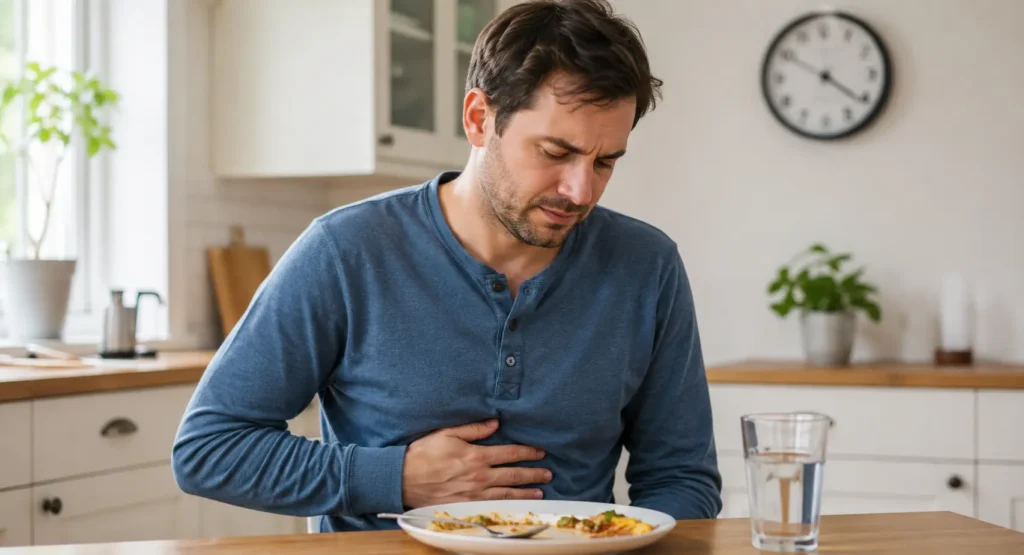
When I first researched the food poisoning timeline, I expected a simple answer. You eat contaminated food, become sick within a few hours, and recover the next day.
The evidence showed me that the timeline is rarely that simple.
Some food toxins cause vomiting within 30 minutes. Some bacteria take several days to cause diarrhea, fever, and stomach cramps. Other infections may not appear for a week or longer.
This also means the last meal you ate may not be the meal that made you sick. The CDC explains that food poisoning often starts two or three days after a contaminated meal. Some illnesses take even longer.
The timeline is easier to understand when divided into four stages:
Exposure → incubation → active illness → recovery
This guide explains how fast food poisoning can hit, how long symptoms may last, and when medical care may be needed.
Food Poisoning Timeline at a Glance
Food poisoning, also called foodborne illness, happens when food or drink contains harmful bacteria, viruses, parasites, toxins, or chemicals.
Many cases improve within a few days. However, the exact timeline depends on the cause, the severity of the illness, and the person’s overall health.
| Stage | What happens | Possible timeframe |
|---|---|---|
| Exposure | You eat or drink something contaminated | Day 0 |
| Incubation | The germ or toxin is present, but symptoms have not started | 30 minutes to several weeks |
| Symptom onset | Nausea, vomiting, diarrhea, cramps, or fever begins | Depends on the cause |
| Active illness | Symptoms become stronger or more frequent | Several hours to several days |
| Early recovery | Vomiting and diarrhea begin to ease | Often within 1–3 days in mild cases |
| Full recovery | Appetite, hydration, digestion, and energy return | Several days to more than a week |
This is only a general guide. Different foodborne illnesses have different incubation periods and recovery times.
How Long Does It Take for Food Poisoning to Start?
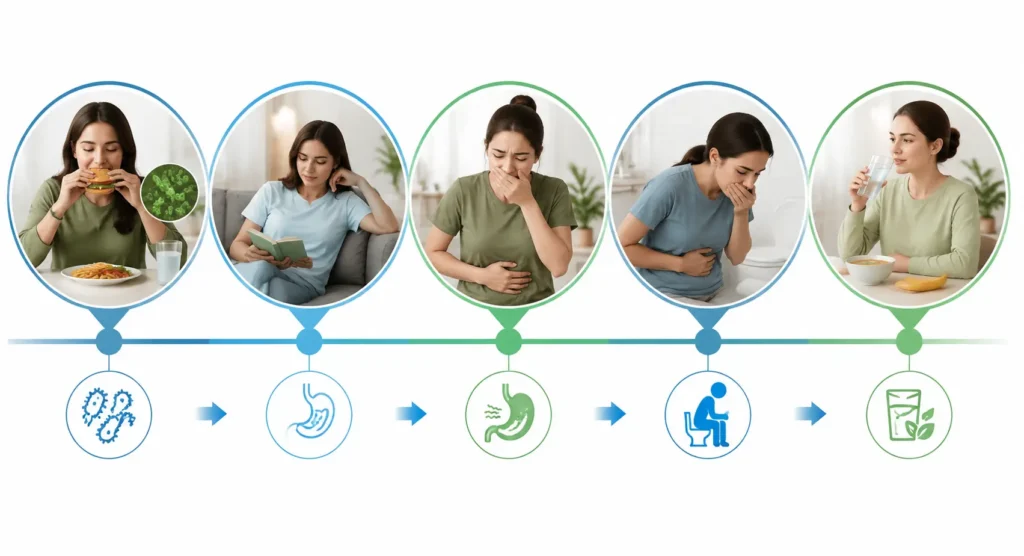
Food poisoning may start within 30 minutes, but some types take days or weeks to appear.
The time between eating contaminated food and developing symptoms is called the incubation period.
Fast symptoms are often linked to toxins already present in food. Slower symptoms are more likely to involve bacteria, viruses, or parasites that need time to affect the digestive system.
Within 30 minutes to 8 hours
Very fast food poisoning may be caused by:
- Staphylococcus aureus
- Vomiting-type Bacillus cereus
- Certain fish or shellfish toxins
- Chemical contamination
Staph food poisoning often causes sudden nausea, vomiting, stomach cramps, and diarrhea. Symptoms usually start within 30 minutes to eight hours and often last no longer than 24 hours.
Foods sometimes linked with Staph toxin include sandwiches, sliced meats, cream-filled pastries, and prepared salads left at unsafe temperatures.
Within 6 to 24 hours
Food poisoning that begins later the same day may be linked to:
- Clostridium perfringens
- Diarrheal-type Bacillus cereus
- Some Salmonella infections
Clostridium perfringens commonly causes watery diarrhea and stomach cramps. Symptoms often begin within 6 to 24 hours and last about one day.
These illnesses may be associated with meat, poultry, gravy, rice, stews, and food prepared in large batches.
Within 12 to 48 hours
Norovirus is a common cause of sudden vomiting and diarrhea.
Symptoms usually start 12 to 48 hours after exposure. Most people recover within one to three days.
Norovirus can spread through contaminated food, water, surfaces, or close contact with an infected person.
Within 1 to 3 days
Several foodborne illnesses may begin within this window, including:
- Norovirus
- Salmonella
- Some E. coli infections
- Vibrio
- Intestinal Listeria infection
Salmonella symptoms can start from six hours to six days after infection. The illness often lasts four to seven days.
Common symptoms include diarrhea, fever, stomach cramps, nausea, and sometimes vomiting.
Within 2 to 7 days
A slower onset may be linked to:
- Campylobacter
- Shiga toxin-producing E. coli
- Shigella
- Some Salmonella infections
Campylobacter symptoms often start two to five days after exposure. They may include diarrhea, fever, stomach cramps, nausea, and vomiting. The diarrhea may be bloody.
Shiga toxin-producing E. coli may cause severe stomach cramps, vomiting, and bloody diarrhea. In rare cases, it can lead to a serious kidney complication called hemolytic uremic syndrome.
After one week or longer
Some foodborne illnesses have a long incubation period.
Possible causes include:
- Cyclospora
- Giardia
- Cryptosporidium
- Hepatitis A
- Invasive listeriosis
These infections may take a week or longer to cause symptoms. This is why checking only your last meal can be misleading.
How Fast Does Food Poisoning Hit?
People who ask “how fast does food poisoning hit?” are often dealing with symptoms that appeared without warning.
Food poisoning can feel sudden because you may feel normal during the incubation period. Then symptoms may begin quickly.
Common symptoms include:
- Nausea
- Vomiting
- Diarrhea
- Stomach cramps
- Abdominal pain
- Fever
- Chills
- Headache
- Weakness
- Loss of appetite
Toxin-related food poisoning usually hits fastest. Staph toxin, for example, can cause strong nausea and vomiting within hours.
Bacterial infections such as Campylobacter and E. coli often take longer because the bacteria need time to affect the intestines.
A fast onset does not always mean the illness is severe. A slower onset does not mean it is harmless.
How Long Does Food Poisoning Last?
Most food poisoning lasts from a few hours to several days. Many cases improve within one week.
However, recovery time depends on the cause.
| Cause | Typical onset | Typical duration |
| Staphylococcus aureus | 30 minutes–8 hours | 24 hours or less |
| Clostridium perfringens | 6–24 hours | About 1 day |
| Bacillus cereus | 10–16 hours | 24–48 hours |
| Norovirus | 12–48 hours | 1–3 days |
| Salmonella | 6 hours–6 days | 4–7 days |
| Campylobacter | 2–5 days | Usually within 7 days |
| E. coli O157 | Usually 3–4 days | Often 5–7 days |
| Vibrio parahaemolyticus | 4–96 hours | 2–5 days |
| Cyclospora | Usually about 1 week | May return for weeks |
These ranges are estimates. They should not be used to diagnose a specific infection.
Mild food poisoning
A mild toxin-related illness may improve within 12 to 48 hours.
Vomiting may stop first. Diarrhea and stomach cramps may take longer to settle.
Moderate food poisoning
A bacterial or viral illness may last three to seven days.
Appetite, energy, and normal digestion may return at different times. You may still feel weak after vomiting stops.
Persistent symptoms
Symptoms lasting more than one week may be linked to:
- A longer bacterial infection
- A parasite
- Ongoing dehydration
- Temporary lactose intolerance
- Post-infectious digestive problems
- Another medical condition
Persistent or worsening symptoms should be checked by a healthcare professional.
How Long Do Food Poisoning Symptoms Last?
Individual symptoms do not always end at the same time.
Vomiting
Vomiting from a fast-acting toxin may improve within 12 to 24 hours. Viral or bacterial illnesses may cause vomiting for longer.
Seek help if you cannot keep fluids down.
Diarrhea
Diarrhea may last from one day to more than a week.
Adults should seek medical advice for diarrhea lasting more than three days, frequent loose stools, bloody or black stool, severe pain, or signs of dehydration.
Stomach cramps
Stomach cramps often improve as vomiting and diarrhea slow down.
Severe, one-sided, or worsening pain should not automatically be blamed on food poisoning. Appendicitis and other abdominal conditions can cause similar symptoms.
Fever
A mild fever may improve as the infection clears.
A fever above 102°F, or a fever with bloody diarrhea, severe pain, weakness, or dehydration, needs medical attention.
Fatigue
Fatigue may continue after stomach symptoms improve.
Vomiting and diarrhea cause the body to lose water, salts, and calories. It can take time for strength to return.
Food Poisoning Recovery Timeline
Food poisoning does not follow the same daily pattern for everyone. Still, many mild cases move through similar stages.
First 24 hours
Vomiting, nausea, diarrhea, and cramps may be at their worst.
The main goal is to replace lost fluids. Take small, frequent sips if drinking a large amount makes nausea worse.
Days 2 and 3
Vomiting may slow down. Fluids may become easier to keep down.
Diarrhea, cramps, poor appetite, and tiredness may continue. Look for steady improvement rather than expecting every symptom to disappear at once.
Days 4 to 7
Many people begin returning to normal meals and daily activities.
However, Salmonella, Campylobacter, and some E. coli infections may still cause symptoms during this period.
Seek medical advice for bloody diarrhea, high fever, severe pain, frequent vomiting, weakness, or dehydration.
After one week
Symptoms lasting more than a week deserve attention, especially if they are not improving.
Possible causes include a parasitic infection, prolonged bacterial infection, dehydration, temporary lactose intolerance, or another digestive problem.
What Should You Eat After Food Poisoning?
There is no required food poisoning diet.
Fluids are the priority. Drink water or an oral rehydration drink to replace lost fluids and electrolytes.
When your appetite returns, you can usually begin eating again. Start with small portions.
Simple foods may feel easier to tolerate:
- Rice
- Toast
- Crackers
- Bananas
- Applesauce
- Broth
- Potatoes
- Plain noodles
- Lean, simply cooked foods
Some foods may temporarily worsen diarrhea:
- Caffeinated drinks
- Fried foods
- High-fat foods
- Sugary drinks
- Large amounts of fruit juice
- Milk and dairy products
Temporary lactose intolerance can happen after food poisoning.
Which Meal Caused the Food Poisoning?
The last meal you ate may not be the cause.
The CDC recommends writing down what you ate during the week before symptoms started.
Ask yourself:
- What did I eat during the last seven days?
- Did anyone else eat the same food?
- Did anyone else become sick?
- Did I eat raw or undercooked meat, eggs, poultry, or seafood?
- Did I consume unpasteurized milk or juice?
- Did I eat deli meat, sprouts, or prepared salad?
- Was food left outside the refrigerator?
- Did I attend a buffet, party, or catered event?
- Did I drink untreated water?
- Has any food I bought been recalled?
Keep receipts, labels, packaging, and leftover food when possible. These details may help public-health officials investigate an outbreak.
Timing can narrow the possibilities. It cannot confirm the exact food or pathogen.
Common Foods Linked to Foodborne Illness
| Food or exposure | Possible cause |
| Raw or undercooked poultry | Salmonella, Campylobacter |
| Ground beef | Shiga toxin-producing E. coli |
| Raw eggs | Salmonella |
| Raw oysters and shellfish | Vibrio, norovirus, marine toxins |
| Unpasteurized milk or soft cheese | Listeria, Campylobacter, Salmonella |
| Deli meat and hot dogs | Listeria |
| Rice and starchy foods | Bacillus cereus |
| Meat, poultry, and gravy | Clostridium perfringens |
| Prepared meat or egg salads | Staphylococcus aureus |
| Leafy greens and sprouts | E. coli, Salmonella, Cyclospora |
| Improperly canned food | Clostridium botulinum |
| Contaminated water | E. coli, Giardia, Cryptosporidium |
These are possible links. They do not prove that a particular food caused an illness.
Food Poisoning Without Vomiting or Diarrhea
You can have food poisoning without vomiting. Some infections mainly cause diarrhea and stomach cramps.
You can also have food poisoning without diarrhea. Staph toxin may mainly cause nausea and vomiting.
Rare forms of food poisoning may affect the nervous system. Emergency symptoms include:
- Blurred or double vision
- Muscle weakness
- Trouble speaking
- Trouble swallowing
- Paralysis
- Breathing difficulty
These symptoms require immediate emergency care.
Food Poisoning vs. Stomach Bug
Food poisoning and a stomach bug can look similar. Both can cause vomiting, diarrhea, cramps, nausea, and fever.
| Feature | Food poisoning | Stomach bug |
| Main cause | Contaminated food or drink | Usually a virus spread between people |
| Onset | 30 minutes to several weeks | Often 12–48 hours for norovirus |
| People affected | People who shared a meal may become sick | Family, school, or work contacts may become sick |
| Duration | Hours to weeks | Often 1–3 days with norovirus |
Norovirus can cause both person-to-person illness and foodborne outbreaks.
When Should You See a Doctor?
Contact a healthcare professional if you have:
- Bloody or black stool
- Diarrhea lasting more than three days
- Frequent vomiting
- Inability to keep fluids down
- Fever above 102°F
- Severe stomach pain
- Confusion
- Symptoms that are getting worse
- Signs of dehydration
Possible signs of dehydration include:
- Extreme thirst
- Dry mouth
- Dark urine
- Reduced urination
- Dizziness
- Fainting
- Severe weakness
Seek medical advice sooner when symptoms affect:
- Infants
- Young children
- Pregnant people
- Adults aged 65 or older
- People with weakened immune systems
- People with serious medical conditions
Should You Report Suspected Food Poisoning?
Report suspected restaurant food poisoning to your local or state health department.
You can report it even when you do not know which food caused the illness. Reports help officials identify outbreaks and prevent more people from becoming sick.
Keep receipts, product labels, food packaging, leftover food, and notes about when symptoms began.
Frequently Asked Questions
Can food poisoning start immediately?
Yes. Some toxins can cause symptoms within 30 minutes.
Can food poisoning start after 24 hours?
Yes. Norovirus, Salmonella, Campylobacter, E. coli, and other pathogens may take one or more days to cause symptoms.
Can food poisoning start three days after eating?
Yes. Many foodborne illnesses begin two or three days after exposure.
How long does mild food poisoning last?
A mild toxin-related case may improve within 24 to 48 hours. Other infections may take several days.
How do you know food poisoning is ending?
Signs of recovery include less vomiting, less diarrhea, fluids staying down, reduced cramping, normal urination, and returning energy.
Is food poisoning contagious?
Some causes are contagious. Norovirus and certain bacteria can spread through hands, surfaces, food, water, vomit, or stool.
When can you return to work?
It depends on the cause, your symptoms, your job, and local health rules. Food workers, healthcare workers, and childcare staff may need to stay home longer.
Conclusion
After reviewing the medical evidence, the biggest lesson I learned is that there is no single food poisoning timeline.
Food poisoning may hit within 30 minutes. It may start three days after a meal. Some infections take even longer. Symptoms may last for a few hours, several days, or more than a week.
I would not use timing alone to decide what caused an illness. I would look at what was eaten, when symptoms started, whether other people became sick, and whether the condition is improving.
Most mild cases get better with fluids, rest, and time. But bloody diarrhea, repeated vomiting, severe pain, dehydration, neurological symptoms, or illness in a high-risk person need medical attention.
The timeline helps you understand what may be happening. More importantly, it helps you recognize when waiting is no longer the safest choice.