
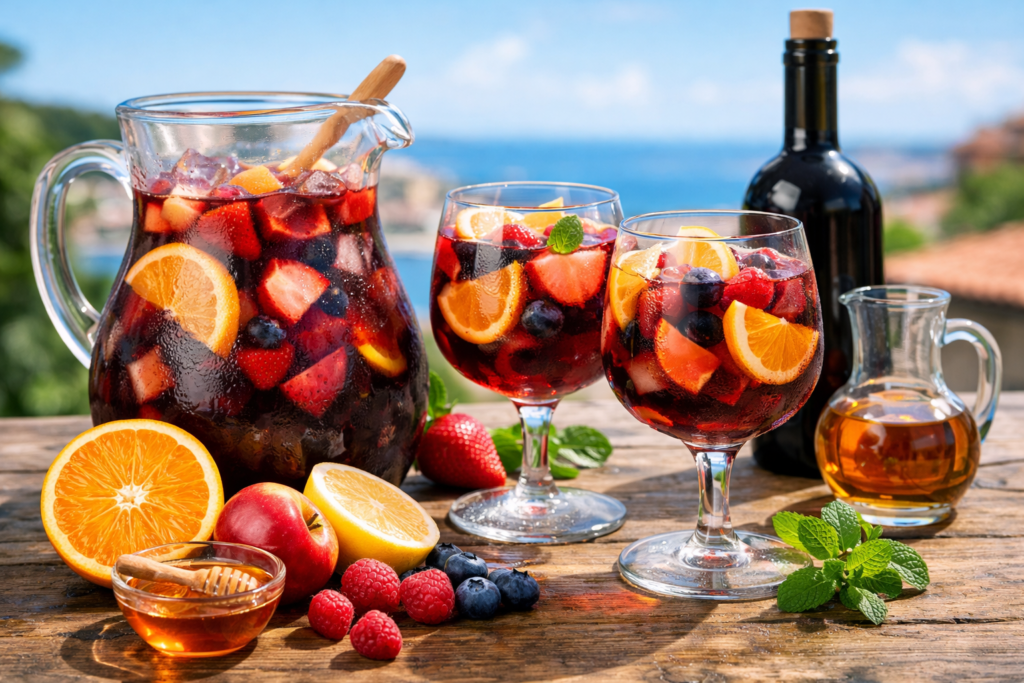
Sangria health benefits are often discussed because this colourful drink contains wine and fresh fruit. It may look lighter and healthier than beer, spirits, or creamy cocktails. However, its fruity taste can hide the amount of alcohol and sugar in each glass.
Sangria is not a health drink. The fruit may add flavour and small amounts of nutrients, but it does not eliminate the risk associated with alcohol. In fact, health experts now warn that even low levels of alcohol can raise the risk of some diseases, including certain cancers. It does not mean every adult must avoid sangria completely. It means you should understand what is in your glass, control your portion, and avoid treating it as a source of health benefits.
This guide explains sangria’s nutrition, potential benefits, key risks, and safer ways to enjoy it.
What Is Sangria?
Sangria is a wine-based drink that is usually made with:
- Red or white wine
- Chopped oranges, apples, lemons, or berries
- Fruit juice
- Sparkling water or soda
- Sugar, honey, or syrup
- Brandy or another spirit in some recipes
- Herbs and spices such as mint or cinnamon
Traditional versions are strongly linked with Spain and Portugal. European rules describe sangria as a wine-based drink flavoured with citrus fruit. It may also contain spices, carbon dioxide, fruit juice, or pieces of citrus fruit. Recipes can be very different. Some are dry and light, while others contain sweet juice, soda, syrup, and extra alcohol.
Common types include:
- Red wine sangria
- White wine sangria
- Rosé sangria
- Sparkling sangria
- Sangria with brandy
- Low-sugar sangria
- Alcohol-free sangria
Because recipes vary so much, two glasses of sangria may have very different amounts of alcohol, sugar, and calories.
Sangria Nutrition Facts
There is no single nutrition label that applies to every sangria recipe.
The final nutrition depends on:
- The type and amount of wine
- Whether brandy or another spirit is added
- The amount of fruit juice
- Added sugar, honey, or syrup
- Sweet or dry soda
- Serving size
- Whether the fruit pieces are eaten
Are There Real Sangria Health Benefits?
Sangria contains fruit and wine so that it may provide small amounts of vitamins and plant compounds. However, these possible benefits should not be used as a reason to start drinking alcohol.
The risks from alcohol are more important than the small amount of nutrients found in a glass of sangria.
Fruit Can Add Some Nutrients
Fresh oranges, berries, apples, and lemons contain vitamins and plant compounds.
When fruit is added to sangria, a small amount of these nutrients may enter the drink. Eating the fruit pieces may also provide some fibre.
However, you would receive far more nutrition by eating a fresh piece of fruit without alcohol or added sugar.
Wine Contains Plant Compounds
Red wine contains plant compounds called polyphenols. Resveratrol is one of the best-known examples.
These compounds are often described as antioxidants. This has led to claims that red wine and sangria are good for the heart.
Current evidence does not support drinking alcohol to improve health. The CDC states that moderate alcohol use does not reduce the risk of death compared with not drinking. Even moderate drinking may raise the risk of cancer and heart disease. Get helpful plant compounds from grapes, berries, nuts, vegetables, and other foods without drinking alcohol.
Social Enjoyment Can Feel Positive
Sangria is often served at meals, parties, holidays, and summer events. Sharing a drink may be part of an enjoyable social experience.
However, the positive part comes from spending time with other people, not from the alcohol itself.
Alcohol may make a person feel relaxed for a short time, but it can also affect judgment, sleep, mood, balance, and reaction time.
Major Health Risks of Sangria
Sangria carries the same basic alcohol risks as wine, beer, and spirits.
A fruity taste, ice, or sparkling water does not make the alcohol harmless.
Alcohol Raises Cancer Risk
All alcoholic drinks, including red wine, white wine, beer, spirits, and sangria, can raise cancer risk.
Alcohol use has been linked with cancers of the:
- Mouth
- Throat
- Voice box
- Esophagus
- Liver
- Colon and rectum
- Breast
The risk usually becomes greater as alcohol intake increases. However, the risk of some cancers can rise even at low levels of drinking. Antioxidants in sangria do not remove this risk.
Sangria Can Be High in Sugar
Many sangria recipes contain more sugar than plain wine.
Sugar may come from:
- Fruit juice
- Lemonade
- Sweet soda
- Simple syrup
- Honey
- Sweet wine
- Flavored liqueurs
- Canned fruit syrup
A large glass can contain several sources of sugar at once.
Regularly drinking high-sugar beverages may add extra calories and make blood sugar control more difficult. It can also increase the risk of tooth decay.
People with diabetes or blood sugar concerns should check the ingredients and speak with a healthcare professional when needed.
It Can Add Extra Calories
Calories in sangria mainly come from alcohol and sugar.
Liquid calories can be easy to overlook because they may not make you feel as full as solid food. Large servings and repeated refills can add many calories to a meal.
This can make weight management harder, especially when sangria is served with fried snacks, desserts, or other high-calorie foods.
It May Cause Dehydration
Adding ice, soda water, or fruit does not turn sangria into a hydrating drink.
Alcohol can increase fluid loss and may contribute to:
- Thirst
- Dry mouth
- Headaches
- Tiredness
- Dizziness
Hot weather can make the problem worse. Drink plain water before, during, and after alcohol.
Water can lower the risk of dehydration, but it does not remove alcohol from your body more quickly.
It Can Affect Sleep and Mood
Alcohol may make you feel sleepy at first, but it can reduce sleep quality later in the night.
After drinking, some people may experience:
- Broken sleep
- Early waking
- Low energy
- Irritability
- Anxiety
- Poor focus
Using alcohol to manage stress or sadness can become an unhealthy habit. Speak with a qualified professional when drinking starts affecting your mood, relationships, work, or daily routine.
It Can Interact With Medicines
Alcohol can interact with prescription and over-the-counter medicines.
Some combinations may increase sleepiness, slow reaction time, worsen side effects, or make driving unsafe. The FDA advises people to read medicine labels and ask a doctor or pharmacist about possible alcohol interactions. Re may be needed with:
- Sleep medicines
- Anxiety medicines
- Antidepressants
- Opioid painkillers
- Allergy medicines
- Cold and cough products
- Blood thinners
- Diabetes medicines
- Some antibiotics
- Medicines processed by the liver
Do not assume a medicine is safe with sangria simply because it is available without a prescription.
Is Sangria Good for Heart Health?
Older studies suggested that moderate red wine intake might support heart health. These reports helped create the belief that wine and sangria were healthy choices.
Newer reviews have questioned those findings. People who drank small amounts of wine in earlier studies may also have exercised more, eaten healthier food, had better healthcare, or followed other healthy habits.
It was difficult to know whether wine caused the reported benefits.
Current CDC information states that moderate drinking may increase the risk of chronic disease compared with not drinking. People who do not drink should not start drinking for health reasons. For health, better-supported habits include:
- Regular physical activity
- A balanced diet
- Not smoking
- Healthy sleep
- Blood pressure control
- Regular medical checkups
Is Sangria Better Than Other Alcoholic Drinks?
Sangria is not automatically safer than another alcoholic drink.
Its effect depends on the recipe, serving size, and amount consumed.
Sangria Compared With Plain Wine
Plain dry wine usually contains less sugar than sweet sangria because it does not include juice, syrup, sweet soda, or added sugar.
However, both drinks contain alcohol and carry alcohol-related risks.
Sangria Compared With Spirits
Sangria may have a lower alcohol percentage than straight spirits, especially when mixed with sparkling water.
However, people often drink sangria in larger glasses. Some recipes also contain brandy, rum, or liqueur.
A large glass may contain more than one standard drink.
Sangria Compared With Sweet Cocktails
A simple homemade sangria without added sugar may contain less sugar than a cocktail made with syrup, cream, or sweet soda.
Still, this depends on the actual recipe. A sweet restaurant or bottled sangria may contain a large amount of sugar.
How Much Alcohol Is in One Glass of Sangria?
It can be difficult to know how much alcohol is in sangria because several ingredients are mixed in one pitcher.
In the United States, one standard drink contains about 14 grams of pure alcohol. That is close to the amount in five fluid ounces of wine at 12% alcohol by volume. Sangria is not always equal to one standard drink.
It may contain more than one drink when:
- The serving is large
- Strong wine is used
- Brandy or liqueur is added
- Little water or ice is included
- The glass is refilled without measuring
Measure the wine and spirits used in the full recipe. Then divide that amount by the number of servings.
How Much Sangria Is Safe?
No amount of alcohol is completely free of risk.
U.S. guidance describes moderate drinking as no more than two drinks in one day for men and no more than one drink in one day for women. These are upper limits, not targets or guarantees of safety. Drinking less lowers risk. Advice may differ by country, age, sex, health condition, and personal risk.
You should avoid alcohol completely when you:
- Are pregnant or may be pregnant
- Are below the legal drinking age
- Plan to drive or use machinery
- Take medicines that interact with alcohol
- Have certain liver or health conditions
- Cannot control how much you drink
- Are recovering from alcohol use disorder
- Have been told not to drink by a healthcare professional
Is Sangria Safe During Pregnancy?
Alcohol should be avoided during pregnancy.
There is no known safe amount, safe time, or safe type of alcohol during pregnancy. Drinking may place the baby at risk of lifelong health and development problems. ludes:
- Sangria
- Wine
- Beer
- Spirits
- Cocktails
- Alcohol added to punches
For an alternative, choose a drink clearly marked 0.0% alcohol. Some products described as “non-alcoholic” may still contain a small amount, so read the label carefully.
Speak with your doctor or maternity care provider when you are unsure.
Sangria and Weight Loss
Sangria does not support weight loss.
Alcohol and sugar add calories, while liquid drinks may not control hunger well. Drinking can also lower self-control and make high-calorie food more tempting.
To reduce the effect on your weight:
- Choose a smaller glass
- Use dry wine
- Skip added sugar
- Avoid brandy and liqueur
- Replace juice with sparkling water
- Eat a balanced meal before drinking
- Avoid repeated refills
- Track drinks as well as food
Alcohol can still affect health and weight even when a recipe contains no added sugar.
Homemade vs Store-Bought Sangria
Homemade Sangria
The main benefit of making sangria at home is control.
You can:
- Measure the alcohol
- Choose dry wine
- Skip added sugar
- Use fresh fruit
- Add plain sparkling water
- Avoid sweet syrups
- Make smaller servings
Homemade does not mean risk-free. A homemade pitcher may still be strong if it contains a full bottle of wine and extra spirits.
Store-Bought Sangria
Bottled and canned sangria can be convenient, but ingredients differ by brand.
Check the label for:
- Alcohol by volume
- Serving size
- Calories
- Total sugar
- Added sugar
- Number of servings in the bottle or can
Do not assume one container equals one serving.
A Lower-Sugar Sangria Recipe
This recipe removes added sugar, sweet soda, juice, and extra spirits. It still contains alcohol, so portions matter.
Ingredients
- One 750 ml bottle of dry red wine
- Two cups of plain sparkling water
- One orange, thinly sliced
- One apple, chopped
- Half a cup of fresh berries
- One cinnamon stick
- Ice
Directions
Place the orange, apple, berries, and cinnamon in a large pitcher.
Pour in the wine and stir gently.
Chill the mixture for two to four hours.
Add sparkling water and ice just before serving.
Use a small glass and measure each serving instead of filling the glass to the top.
Why This Version Is Lighter
This recipe:
- Has no added sugar
- Uses no syrup
- Contains no sweet soda
- Adds no brandy or liqueur
- Uses sparkling water for volume
- Includes fresh fruit for flavour
It is lower in sugar than many traditional recipes, but it is not a health drink.
Alcohol-Free Sangria Recipe
An alcohol-free version is the better option for people who want the flavour and social experience without alcohol.
Ingredients
- Two cups of unsweetened pomegranate or grape juice
- Four cups of sparkling water
- One sliced orange
- One sliced lemon
- One chopped apple
- One cup of mixed berries
- Fresh mint
- Ice
Directions
Add the fruit and mint to a pitcher.
Pour in the juice and chill for one to two hours.
Add sparkling water and ice before serving.
For less sugar, use more sparkling water and less juice.
During pregnancy or when alcohol must be avoided completely, check that every ingredient is labelled 0.0% alcohol.
Smart Ways to Enjoy Sangria More Safely
You cannot remove every alcohol-related risk, but these steps can help reduce harm:
- Measure your serving instead of guessing.
- Avoid adding brandy, rum, or liqueur.
- Use dry wine and plain sparkling water.
- Skip sugar, syrup, lemonade, and sweet soda.
- Drink slowly.
- Eat before and while drinking.
- Alternate each alcoholic drink with water.
- Do not mix sangria with other alcoholic drinks.
- Never drive after drinking.
- Stop when you notice changes in balance, speech, focus, or judgment.
- Keep alcoholic sangria away from children.
- Choose alcohol-free sangria when you do not want the risks of alcohol.
Final Thoughts
Sangria is colourful, refreshing, and closely linked with meals and social events. However, its fruit content should not make it seem healthier than it is.
The small amount of vitamins and plant compounds does not cancel the effects of alcohol. Sangria may also contain more sugar and calories than plain wine, especially when made with juice, syrup, sweet soda, and brandy.
The smartest approach is to treat sangria as an occasional alcoholic drink, not as a health product. Choose a small serving, avoid added sugar and extra spirits, drink water, and never drive after drinking.
People who do not already drink should not begin drinking to gain possible health benefits. Fresh fruit, regular exercise, healthy food, quality sleep, and strong social relationships provide safer and more reliable ways to support your health.