
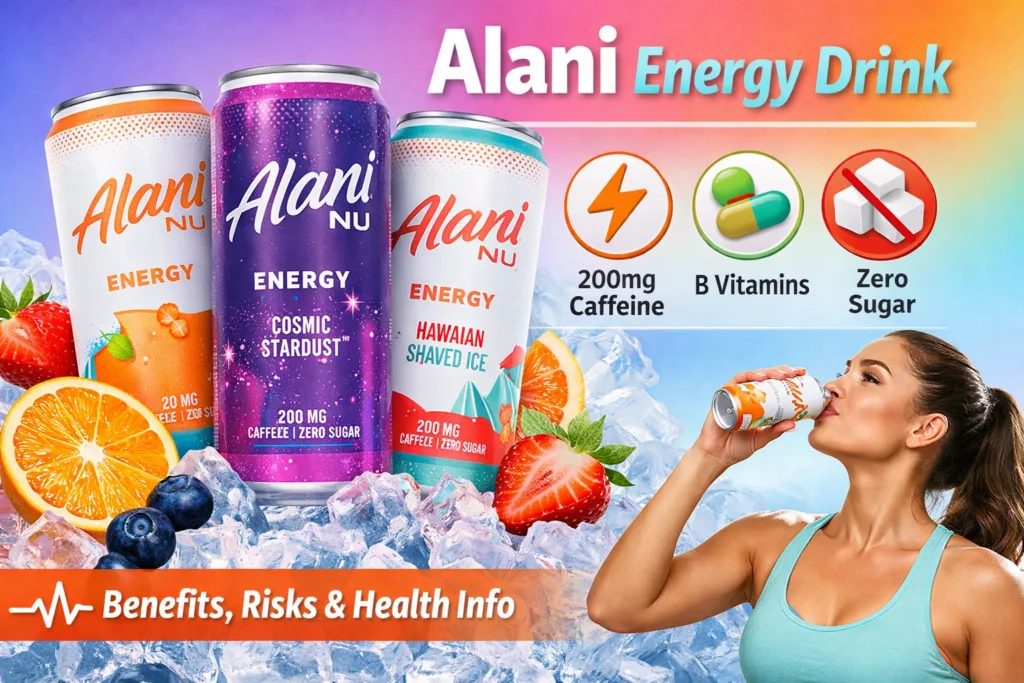
Energy drinks have become very popular in recent years. Students use them while studying, workers drink them to stay alert, and fitness lovers often have them before exercise.
One brand that has received significant attention is Alani Energy Drink, also known as Alani Nu Energy. Its bright cans, sweet flavors, zero-sugar formula, and strong social media presence have helped it become popular, especially among young adults.
But is Alani Energy Drink healthy?
Alani has fewer calories and less sugar than many regular energy drinks. However, each standard can also contain 200 milligrams of caffeine. That is a large amount for one drink.
For many healthy adults, drinking Alani once in a while may be fine. Still, it should not replace sleep, water, healthy meals, or good daily habits.
In this guide, we will look at the ingredients in Alani Energy Drink, possible benefits, side effects, caffeine levels, and safety tips.
What Is Alani Energy Drink?
Alani Energy Drink is a sugar-free beverage from Alani Nu. The company also sells protein bars, supplements, protein shakes, and other fitness products.
The drink is sold as a low-calorie option for people who want more energy without drinking a lot of sugar.
Alani Energy Drink comes in many flavors, including:
- Cosmic Stardust
- Breezeberry
- Cherry Slush
- Juicy Peach
- Hawaiian Shaved Ice
- Orange Kiss
- Pink Slush
A standard 12-ounce can usually contains:
- About 10 to 15 calories
- Zero grams of sugar
- 200 milligrams of caffeine
- B vitamins
- Taurine
- L-theanine
- L-carnitine
- Ginseng extract
- Guarana extract
- Low-calorie sweeteners
The exact ingredients and nutrition facts may be slightly different depending on the flavor. It is always a good idea to read the label before drinking it.
Is Alani Energy Drink Healthy?
Alani Energy Drink may be a better choice than a sugar-filled energy drink, but that does not make it a health drink.
Its main advantage is that it contains very little sugar and very few calories. This may help people who are trying to reduce their sugar intake.
However, the drink still contains a high amount of caffeine.
One can provides 200 milligrams of caffeine. For most healthy adults, up to 400 milligrams of caffeine per day is generally considered a safe upper amount. However, every person reacts differently.
Some people can drink 200 milligrams without a problem. Others may feel anxious, shaky, dizzy, or unable to sleep.
You must also remember that caffeine can come from other sources, including:
- Coffee
- Tea
- Soda
- Chocolate
- Pre-workout supplements
- Certain medicines
- Other energy drinks
Therefore, Alani may be safe for some adults when used carefully, but it is not healthy for everyone.
How Much Caffeine Is in Alani Energy Drink?
A standard 12-ounce can of Alani Energy Drink contains 200 milligrams of caffeine.
That is about half of the general daily caffeine limit for a healthy adult.
Two cans would provide 400 milligrams of caffeine. This does not include caffeine from coffee, tea, soda, chocolate, or supplements consumed during the same day.
The effect of caffeine depends on several factors, including:
- Your age
- Your body size
- Your caffeine tolerance
- How quickly you drink it
- Whether you have eaten
- What time of day you drink it
- Whether you take certain medicines
People who rarely consume caffeine may feel a much stronger effect than people who drink coffee every day.
Alani Energy Drink Nutrition Facts
Nutrition facts may change slightly between flavors, but one can usually contain:
- Calories: 10 to 15
- Sugar: 0 grams
- Caffeine: 200 milligrams
- Sodium: About 180 to 200 milligrams
- Carbohydrates: A small amount
- B vitamins: Often around or above 100% of the daily value
Alani contains almost no protein, fiber, healthy fat, or natural carbohydrates.
This means it does not give your body the same kind of energy as a healthy meal or snack. Its quick energy effect mostly comes from caffeine.
Alani Energy Drink Ingredients Explained
Let us take a closer look at the main ingredients found in Alani Energy Drink.
Caffeine
Caffeine is the main ingredient that makes you feel more awake.
It works by stimulating your brain and nervous system. It may help improve focus, attention, reaction time, and exercise performance for a short period.
However, too much caffeine can cause:
- Anxiety
- Shaking
- Headaches
- Fast heartbeat
- Restlessness
- Trouble sleeping
- Dizziness
- Stomach discomfort
Caffeine may affect you more strongly when you drink it quickly or on an empty stomach.
Taurine
Taurine is a substance naturally found in the human body. It supports nerve signals, fluid balance, and muscle function.
It is often added to energy drinks and sports products.
Although taurine may support some body functions, it is not the main reason Alani makes people feel more energetic. That effect mainly comes from caffeine.
L-Theanine
L-theanine is an amino acid commonly found in tea.
It is often combined with caffeine because it may help create a calmer, smoother sense of focus.
However, it does not fully protect you from the side effects of caffeine. You may still experience anxiety, shaking, or sleep problems.
B Vitamins
Alani Energy Drink contains several B vitamins, such as:
- Vitamin B6
- Vitamin B12
- Niacin
- Biotin
- Pantothenic acid
B vitamins help the body turn food into usable energy. They also support normal brain and nerve function.
However, B vitamins do not work like caffeine. They will not suddenly give you energy unless your body is low in those vitamins.
The quick boost you feel after drinking Alani mainly comes from caffeine, not B vitamins.
Guarana
Guarana is a plant that naturally contains caffeine.
It is often added to energy drinks and supplements for extra stimulation. Because guarana contains caffeine, people who are sensitive to stimulants should be careful.
Ginseng
Ginseng is a plant extract used in many supplements. It is often promoted for energy, focus, and physical performance.
However, the amount found in an energy drink may not be enough to create a strong effect on its own.
L-Carnitine
L-carnitine is a substance that helps the body move fatty acids into cells, where they can be used for energy.
It is common in fitness and weight-loss supplements. However, drinking Alani does not automatically cause fat loss.
Artificial and Low-Calorie Sweeteners
Alani uses low-calorie sweeteners instead of regular sugar. Depending on the flavor, these may include sucralose, acesulfame potassium, or erythritol.
These sweeteners help keep the drink low in sugar and calories.
Most people can consume them without a problem. However, some people may experience:
- Gas
- Bloating
- Stomach pain
- Loose stools
If you notice stomach problems after drinking Alani, the sweeteners or carbonation may be the cause.
Preservatives and Flavorings
Alani may also contain ingredients such as:
- Natural flavors
- Citric acid
- Sodium citrate
- Potassium sorbate
- Sodium benzoate
These ingredients help improve taste, control acidity, and keep the drink fresh.
They are common in packaged drinks, but they also show that Alani is a processed beverage rather than a natural source of energy.
Possible Benefits of Alani Energy Drink
Alani Energy Drink may provide some benefits when consumed in moderation.
It May Improve Alertness
The caffeine in Alani may help you feel more awake and focused.
This may be useful when you are studying, driving, working, or completing a difficult task.
However, caffeine only covers up tiredness for a short time. It does not fix the reason you are tired.
It May Support Workout Performance
Caffeine may improve exercise performance for some people.
It may help you:
- Feel more alert
- Exercise for longer
- Feel less tired during a workout
- Improve strength or endurance
- Stay focused during training
However, more caffeine does not always mean better performance. Too much can make you feel shaky, sick, or anxious.
It Contains No Added Sugar
Alani may be a better option than energy drinks high in sugar.
High-sugar drinks can add many calories to your diet and may lead to a quick rise and fall in blood sugar.
Alani avoids this by using low-calorie sweeteners.
Still, sugar-free does not always mean healthy. The amount of caffeine and drinking habits also matter.
It Is Low in Calories
One can usually contains only 10 to 15 calories.
This may appeal to people who are watching their calorie intake or trying to manage their weight.
It Is Convenient
Alani is ready to drink and easy to carry.
You do not need to prepare coffee, tea, or a pre-workout drink. This makes it useful for busy people.
However, convenience can become a problem if you begin depending on it every day.
Alani Energy Drink Side Effects
Alani Energy Drink may cause side effects, especially in people who are sensitive to caffeine.
Anxiety and Shaking
Caffeine can make some people feel nervous, shaky, or uncomfortable.
People with anxiety may notice that their symptoms become worse after drinking a full can.
Fast Heartbeat
A high dose of caffeine can make your heart beat faster.
Some people may also feel heart palpitations, which can feel like pounding, fluttering, or skipped heartbeats.
People with heart conditions should speak with a healthcare professional before drinking highly caffeinated products.
Sleep Problems
Caffeine can stay in your body for many hours.
Drinking Alani in the afternoon or evening may make it harder to fall asleep. It may also reduce sleep quality, even if you can fall asleep.
This can create an unhealthy cycle:
- You feel tired.
- You drink an energy drink.
- The caffeine affects your sleep.
- You feel more tired the next day.
- You drink more caffeine.
Over time, this cycle may harm your energy levels rather than improve them.
Headaches
Caffeine can cause headaches in some people.
It can also cause withdrawal headaches if you drink it regularly and then suddenly stop.
Digestive Problems
The sweeteners, acids, and carbonation in Alani may upset the stomach.
Possible problems include:
- Gas
- Bloating
- Nausea
- Stomach pain
- Diarrhea
- Acid reflux
Caffeine Dependence
Regular caffeine use may lead to dependence.
This means your body becomes used to caffeine and may need more of it to feel the same effect.
When you stop drinking caffeine, you may experience:
- Headaches
- Tiredness
- Irritability
- Poor focus
- Low mood
Energy Crashes
Alani may make you feel alert for a few hours, but the effect does not last forever.
When the caffeine wears off, you may feel tired again. This can feel like an energy crash.
Because Alani contains very little nutrition, it does not provide long-lasting fuel like a balanced meal.
Who Should Avoid Alani Energy Drink?
Alani Energy Drink is not suitable for everyone.
The following groups should avoid it or speak with a healthcare professional before drinking it:
- Children
- Teenagers
- Pregnant women
- Breastfeeding women
- People who are sensitive to caffeine
- People with heart conditions
- People with high blood pressure
- People with anxiety or panic attacks
- People with sleep problems
- People who take medicines that react with caffeine
If you feel chest pain, severe dizziness, extreme anxiety, or an irregular heartbeat after consuming an energy drink, seek medical help.
Is Alani Energy Drink Safe for Teenagers?
Alani Energy Drink is not a good choice for children or most teenagers.
One can contains 200 milligrams of caffeine. That amount may be too high for a young person.
Teenagers who consume too much caffeine may experience:
- Anxiety
- Trouble sleeping
- Shaking
- Headaches
- Fast heartbeat
- Poor concentration
- Caffeine dependence
Teenagers who often feel tired should focus on getting enough sleep, eating regular meals, drinking water, and getting physical activity instead of relying on energy drinks.
Is Alani Energy Drink Safe During Pregnancy?
Alani Energy Drink is not recommended during pregnancy.
One can contains 200 milligrams of caffeine, which is already close to the full daily caffeine limit often advised during pregnancy.
Caffeine may also come from:
- Coffee
- Tea
- Chocolate
- Soda
- Certain medicines
Pregnant or breastfeeding women should speak with their doctor before consuming energy drinks or other high-caffeine products.
Alani Energy Drink vs. Coffee
Many people wonder whether Alani is healthier than coffee.
Both drinks contain caffeine, but they are very different.
Benefits of Alani
- Easy to carry
- Sweet and fruity flavors
- No added sugar
- Very few calories
- Clear caffeine amount on the label
- Added B vitamins
Drawbacks of Alani
- Contains 200 milligrams of caffeine
- Contains sweeteners
- Contains preservatives and flavorings
- May be more expensive
- Can be easy to drink too quickly
Benefits of Coffee
- Contains fewer added ingredients
- Can be prepared without sugar
- Serving size can be controlled
- Often costs less when made at home
- Contains natural plant compounds
Drawbacks of Coffee
- Sugar, cream, and syrup can add many calories
- Caffeine amount may be difficult to measure
- Some people find it bitter
- It may also cause anxiety or sleep problems
Plain black coffee is a simpler and less processed drink. However, a large coffee filled with sugar and cream may not be healthier than a sugar-free Alani.
The better choice depends on the serving size, added ingredients, and your caffeine tolerance.
Does Alani Energy Drink Help With Weight Loss?
Alani Energy Drink does not directly cause weight loss.
It is low in calories, so it may help if you use it to replace a high-calorie soda or sweet coffee.
Caffeine may slightly increase metabolism for a short time. It may also help you feel more active during a workout.
However, these effects are small.
Healthy and lasting weight loss depends on:
- Eating balanced meals
- Controlling portion sizes
- Exercising regularly
- Getting enough sleep
- Drinking water
- Managing stress
- Following healthy habits over time
Alani is not a magic fat-burning drink.
How Much Alani Energy Drink Is Safe?
For many healthy adults, one can may fit within the daily caffeine limit.
However, one can may still be too much for people with low caffeine tolerance.
Two cans contain 400 milligrams of caffeine. That would reach the general daily limit before adding coffee, tea, soda, or other caffeine sources.
A safer approach is to:
- Limit yourself to one can
- Avoid drinking it every day
- Try half a can first
- Track caffeine from all sources
- Avoid drinking it late in the day
- Stop if you experience side effects
Tips for Drinking Alani Energy Safely
Know Your Caffeine Limit
Pay attention to all the caffeine you consume during the day.
Do not forget to count coffee, tea, chocolate, soda, supplements, and medicines.
Avoid Drinking It Late
Try not to drink Alani in the late afternoon or evening.
If you are sensitive to caffeine, even an early afternoon may affect your sleep.
Do Not Mix It With Alcohol
Energy drinks should not be mixed with alcohol.
Caffeine may make you feel more awake, but it does not make you less affected by alcohol.
This may lead you to drink more than you realize or make unsafe choices.
Drink Water
Alani should not replace water.
Drink enough water throughout the day, especially when exercising or in hot weather.
Do Not Use It as a Meal
Alani contains very little nutrition.
It does not provide enough protein, fiber, fat, or carbohydrates to replace breakfast, lunch, dinner, or a balanced snack.
Pay Attention to Your Body
Reduce or stop drinking Alani if you experience:
- Shaking
- Severe anxiety
- Headaches
- Dizziness
- Heart palpitations
- Stomach pain
- Trouble sleeping
Healthier Alternatives to Alani Energy Drink
Several drinks and habits may provide energy without as much caffeine.
Green Tea
Green tea usually contains less caffeine than Alani.
It may provide a lighter energy boost without feeling too strong.
Matcha
Matcha contains caffeine and L-theanine.
You can control the strength by changing the amount of matcha powder you use.
Black Coffee
Plain coffee provides caffeine without artificial sweeteners or preservatives.
Choose a smaller serving if you want less caffeine.
Water and a Healthy Snack
Tiredness may sometimes be caused by hunger or dehydration.
Try drinking water and eating a snack such as:
- Fruit and nuts
- Yogurt
- Eggs
- Whole-grain toast
- Cheese and crackers
- A banana with peanut butter
Better Sleep
Sleep is one of the best natural ways to improve energy.
No energy drink can fully replace seven to nine hours of good-quality sleep.
Pros and Cons of Alani Energy Drink
Pros
- Contains zero added sugar
- Has very few calories
- May improve alertness
- May support workout performance
- Comes in many flavors
- Clearly lists caffeine amount
- Contains added B vitamins
- Easy to carry and drink
Cons
- Contains a high amount of caffeine
- May cause anxiety or shaking
- Can affect sleep
- Contains artificial sweeteners
- May cause stomach problems
- Can lead to caffeine dependence
- Does not provide real nutrition
- Not recommended for children or pregnant women
Frequently Asked Questions
Is Alani Energy Drink healthy?
Alani is low in calories and contains no added sugar. However, it also contains 200 milligrams of caffeine. It may be safe for some healthy adults when used in moderation, but it is not a health drink.
Can I drink Alani every day?
Some adults may tolerate it every day, but daily use can lead to caffeine dependence, poor sleep, and other side effects. It is better to drink it only when needed instead of making it a daily habit.
How much caffeine is in Alani Energy Drink?
A standard 12-ounce can contains 200 milligrams of caffeine.
Is Alani Energy Drink sugar-free?
Most standard Alani Energy Drinks contain zero grams of sugar. They use low-calorie sweeteners instead.
Is Alani better than Monster or Red Bull?
Alani often contains less sugar and fewer calories than regular Monster or Red Bull. However, it still contains a large amount of caffeine. This means it is not automatically healthy.
Can Alani improve workout performance?
The caffeine may help improve focus, endurance, and exercise performance. However, it should not replace water, healthy meals, proper training, or enough sleep.
Does Alani help with weight loss?
Alani does not directly cause weight loss. It may help reduce calories if it replaces a sugary drink, but healthy weight loss still requires good eating and exercise habits.
Can teenagers drink Alani Energy Drink?
Alani is not recommended for children or most teenagers because one can contains 200 milligrams of caffeine.
Can I drink Alani on an empty stomach?
You can, but drinking a highly caffeinated and acidic beverage on an empty stomach may increase nausea, shaking, heartburn, or stomach pain.
Can Alani cause an energy crash?
Yes. You may feel tired after the caffeine wears off, especially if you are not getting enough sleep or food.
Final Verdict: Should You Drink Alani Energy Drink?
Alani Energy Drink is a low-calorie and sugar-free beverage that can provide a quick energy boost.
It may help you feel more alert, focused, and ready for a workout. However, each can contains 200 milligrams of caffeine, which is a high amount for one drink.
For a healthy adult with a good caffeine tolerance, drinking Alani once in a while may be fine.
However, it is not suitable for children, most teenagers, pregnant or breastfeeding women, and people who are sensitive to caffeine.
The best approach is moderation.
Limit your intake, avoid drinking it late in the day, and pay attention to how your body reacts. Most importantly, do not use Alani as a replacement for sleep, water, healthy meals, or medical care.
Medical disclaimer: This article is for general information only. It does not replace professional medical advice, diagnosis, or treatment. Speak with a qualified healthcare professional if you have questions about caffeine or energy drinks.