
Mornings can become busy very quickly. You wake up late, check your phone, get dressed, and suddenly there is no time to prepare breakfast.
That is often when people grab a sugary pastry, eat a bowl of sweet cereal, or skip breakfast completely.
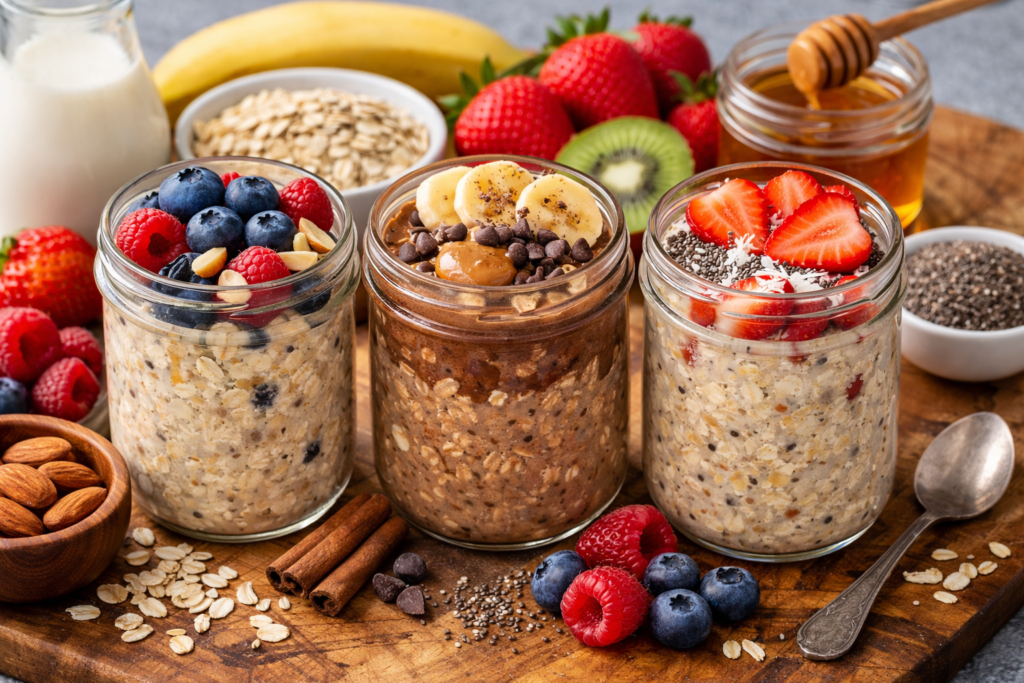
Overnight oats offer a simpler option. You mix oats with milk or another liquid, refrigerate the mixture, and let it soften. By morning, breakfast is already prepared.
The basic recipe takes only a few minutes, but it can be changed in many ways. You can add berries, bananas, yoghurt, nuts, seeds, cocoa, or nut butter based on your taste and nutrition goals.
Overnight oats can provide whole grains, fibre, carbohydrates, and some protein. However, their overall nutritional value depends on the ingredients and portion sizes you use.
This guide explains how to make overnight oats, their possible benefits, common mistakes, safe storage, and several easy recipes for busy mornings.
What Are Overnight Oats?
Overnight oats are made by soaking oats in liquid inside the refrigerator.
Instead of cooking the oats with heat, you let them absorb milk, yoghurt, or a plant-based drink for several hours. This creates a soft and creamy texture.
Most people prepare them at night and eat them the following morning. However, the oats may begin to soften after about four hours.
A basic jar normally contains:
- Rolled oats
- Milk or a plant-based drink
- Yoghurt, if desired
- Fruit
- Nuts or seeds
- A small amount of sweetener
- Flavourings such as cinnamon or vanilla
The finished texture is usually thicker than cereal but softer than dry muesli.
Quick Answer: Are Overnight Oats Healthy?
Overnight oats can be a healthy breakfast when they are made with balanced ingredients and sensible portions.
Oats are a whole grain and contain a soluble fibre called beta-glucan. Research has linked oat beta-glucan to lower LDL cholesterol when consumed in sufficient amounts regularly as part of the diet. Oatmeal has also been shown to improve fullness compared with some ready-to-eat breakfast cereals.
However, overnight oats are not automatically healthy.
A jar filled with large amounts of syrup, chocolate spread, sweetened yoghurt, and sugary toppings may contain far more calories and added sugar than expected.
A balanced jar usually includes:
- A measured serving of oats
- A suitable liquid
- A source of protein
- Fruit
- A small serving of nuts or seeds
- Limited added sugar
The full recipe matters more than the word” “oats” on the label.
Overnight Oats Nutrition Facts
There is no single nutrition label for overnight oats because every recipe is different.
The calories, protein, carbohydrates, fat, fibre, and sugar depend on:
- The amount of oats
- The type of milk
- Whether yoghurt is added
- The amount of fruit
- Nuts and seeds
- Protein powder
- Sweeteners
- Nut butter
- Chocolate or other toppings
A common serving starts with about ½ cup of dry rolled oats. Many commercialrolled oatt labels list roughly 150 calories per 40-gram serving, although serving weights vary by brands. Always check the nutrition label on your package.
What Nutrients Do Oats Provide?
Oats naturally provide:
- Carbohydrates
- Dietary fiber
- Plant protein
- Some unsaturated fat
- Iron
- Magnesium
- Zinc
- Several B vitamins
Adding milk, yoghurt, fruit, nuts, or seeds changes the nutrition profile.
For example:
- Dairy or fortified soy milk may add protein and calcium.
- Greek yoghurt may increase protein.
- Chia seeds add fibre and fat.
- Berries add flavour, vitamins, and natural sweetness.
- Nut butter increases calories, fat, and some protein.
This flexibility is one of the biggest advantages of overnight oats.
Main Benefits of Overnight Oats
Overnight oats may support a balanced eating plan in several ways.
They Are Convenient
The main benefit is simple: breakfast is already waiting for you.
This can be useful for:
- Office workers
- Students
- Parents
- Teachers
- Early-shift workers
- Gym users
- People who travel to work
Preparing breakfast the night before may also reduce the chance of buying an expensive or less nutritious breakfast on the way to work.
They Provide Whole Grains
Oatmeal is one way to include whole grains at breakfast. USDA MyPlate recommends choosing whole-grain foods as part of a balanced diet.
Whole oats contain the bran, germ, and endosperm rather than only the refined inner part of the grain.
They Contain Beta-Glucan Fibre
Oats are known for beta-glucan, a type of soluble fibre.
When mixed with liquid, beta-glucan can form a thick substance in the digestive system. Research reviews have found that regular intake of oat beta-glucan can lower LDL and total cholesterol, especially when consumed in effective amounts as part of the overall diet.
Eating one small jar does not create an instant heart-health result. Benefits depend on the amount consumed, the complete diet, and long-term habits.
They May Help You Feel Full
Fibre and protein can make a meal more satisfying.
In randomised trials, oatmeal increased fullness and reduced hunger compared with certain ready-to-eat oat cereals. Researchers linked some of this difference to beta-glucan content, hydration, and thickness.
To make overnight oats more filling, consider adding:
- Greek yogurt
- Soy milk
- Chia seeds
- Ground flaxseed
- Nut butter
- Nuts
- Protein powder
They Are Easy to Customise
Some people dislike eating the same breakfast every day.
Overnight oats can taste completely different depending on the toppings. One day you can make apple-cinnamon oats, and the next day you can make chocolate-banana or berry yoghurt oats.
This variety can make a meal-prep routine easier to continue.
They May Cost Less Than Buying Breakfast
Oats are often less expensive than café breakfasts, packaged breakfast cups, or daily takeout.
You can prepare several jars at home and use simple ingredients you already have.
The exact savings depend on the brands and toppings you choose.
A Relatable Overnight Oats Example
Imagine two different mornings.
On Monday, you wake up late and leave home without breakfast. By mid-morning, you feel hungry and buy a pastry and a sweet coffee.
On Tuesday, you prepared a jar of overnight oats before going to bed. You take it from the refrigerator, add a few berries, and eat it before leaving.
The oats do not magically make Tuesday healthy. However, planning the meal gave you a ready option and reduced the need to make a rushed choice.
That is the real value of overnight oats for many people: they make a balanced breakfast easier to reach.
How to Make Overnight Oats
The basic process is simple.
Basic Overnight Oats Ingredients
Use:
- ½ cup rolled oats
- ½ cup milk or a plant-based drink
- ¼ cup yoghurt, optional
- 1 teaspoon chia seeds, optional
- Fruit or another topping
- A small amount of sweetener, if needed
Step-by-Step Instructions
- Place the rolled oats in a clean jar or covered container.
- Add the milk and yoghurt.
- Stir in chia seeds, cinnamon, or other flavourings
- Cover the container.
- Place it in the refrigerator for at least four hours, preferably overnight.
- Stir the oats before eating.
- Add fresh or crunchy toppings in the morning.
Add a little more milk when the mixture is too thick.
Use slightly less liquid when you prefer a firmer texture.
What Is the Best Overnight Oats Ratio?
A good starting point is:
1 part rolled oats to 1 part liquid
For example:
- ½ cup oats
- ½ cup milk
When adding chia seeds, yoghurt, or protein powder, you may need more liquid because these ingredients thicken the mixture.
There is no perfect ratio for everyone. Adjust it based on the texture you enjoy.
What Are the Best Oats for Overnight Oats?
Rolled Oats
Old-fashioned rolled oats are usually the easiest choice.
They absorb liquid well while keeping some texture. They normally become soft without turning completely smooth.
Quick Oats
Quick oats can also be used, but they absorb liquid faster and may become very soft or mushy.
They may work well for someone who prefers a smooth texture.
Steel-Cut Oats
Steel-cut oats remain much firmer because they are less flattened.
They can be soaked, but the texture may stay chewy. Many people prefer cooking steel-cut oats before using them in a cold breakfast.
Instant Oat Packets
Flavoured instant packets may contain added sugar, salt, and flavouring.
Plain instant oats can work, but read the label and expect a softer texture.
Five Easy Overnight Oats Recipes
The nutrition information will vary by brand and serving size. These recipes are simple starting points rather than strict meal plans.
1. Classic Berry Overnight Oats
Ingredients:
- ½ cup rolled oats
- ½ cup milk
- ¼ cup plain yoghurt
- ½ cup mixed berries
- 1 teaspoon chia seeds
- A small amount of honey, optional
Instructions:
Mix the oats, plain yoghurt, and chia seeds. Refrigerate overnight. Add the berries before eating or mix them in the night before.
2. High-Protein Overnight Oats
Ingredients:
- ½ cup rolled oats
- ½ cup milk
- ½ cup plain Greek yoghurt
- ½ scoop protein powder
- 1 teaspoon chia seeds
- Berries or banana slices
Instructions:
Mix the protein powder with the milk first to reduce lumps. Add the remaining ingredients and refrigerate overnight.
Protein powders differ in sweetness and thickness, so adjust the liquid as needed.
3. Chocolate Banana Overnight Oats
Ingredients:
- ½ cup rolled oats
- ½ cup milk
- ½ mashed banana
- 1 teaspoon unsweetened cocoa powder
- 1 teaspoon peanut or almond butter
- A small pinch of cinnamon
Instructions:
Mix everything in a jar and refrigerate overnight. Add a few banana slices in the morning.
The banana provides natural sweetness, so extra syrup may not be needed.
4. Apple Cinnamon Overnight Oats
Ingredients:
- ½ cup rolled oats
- ½ cup milk
- ¼ cup yoghurt
- ½ chopped apple
- ½ teaspoon cinnamon
- 1 tablespoon chopped walnuts
Instructions:
Mix the oats, yoghurt, apple, and cinnamon. Refrigerate overnight. Add walnuts before eating to keep them crunchy.
5. Vegan Overnight Oats
Ingredients:
- ½ cup rolled oats
- ½ cup fortified soy or oat drink
- 1 tablespoon chia seeds
- ½ cup fruit
- 1 teaspoon maple syrup, optional
- 1 tablespoon nuts or seeds
Instructions:
Combine the ingredients in a covered jar and refrigerate overnight.
Soy drinks generally provide more protein than many almond or oat drinks, but nutritional profiles vary by brand.
Are Overnight Oats Good for Weight Loss?
Overnight oats may fit into a weight-loss plan, but they do not directly cause weight loss.
Their fibre and protein may help with fullness, making it easier for some people to manage hunger. Studies have found that oatmeal can improve satiety compared with certain breakfast cereals.
However, weight change mainly depends on total calorie intake, activity, sleep, health, and long-term habits.
An overnight oats jar can become very high in calories when it includes large servings of:
- Nut butter
- Honey
- Maple syrup
- Chocolate chips
- Granola
- Dried fruit
- Coconut
- Nuts and seeds
These foods can be nutritious, but portion size still matters.
How to Make Overnight Oats for Weight Loss
Try these practical steps:
- Measure the oats instead of pouring freely.
- Use plain milk or an unsweetened plant drink.
- Add fruit for sweetness.
- Include protein to improve fullness.
- Limit syrups and added sugar.
- Use a measured amount of nuts or nut butter.
- Choose a jar that matches your portion needs.
A “weight-loss recipe” should still be satisfying. Making the serving too small may leave you hungry an hour later.
How to Make High-Protein Overnight Oats
Oats contain some protein, but a basic oat-and-water recipe is not a high-protein meal.
You can increase the protein by adding:
- Greek yogurt
- Cottage cheese
- Dairy milk
- Fortified soy milk
- Protein powder
- Nut butter
- Hemp seeds
A useful combination is oats, Greek yoghurt, milk, and fruit.
Check product labels because protein and calories differ widely between brands.
People with kidney disease or other conditions requiring protein control should follow the advice ofaof aalified healthcare professional.
Are Overnight Oats Good Before a Workout?
Overnight oats can provide carbohydrates, making them a possible pre-workout meal.
However, the best serving and timing depend on:
- Workout intensity
- Workout length
- Digestive comfort
- Total food intake
- Personal fitness goals
A large jar filled with nuts, seeds, and nut butter may digest slowly. Someone exercising soon after breakfast may prefer a smaller and simpler serving.
A possible pre-workout version includes:
- Rolled oats
- Milk
- Banana
- A little yoghurt
- Cinnamon
Try new foods during normal training rather than before an important race or event.
Are Overnight Oats Good After a Workout?
They can be part of a post-workout meal when they provide both carbohydrates and protein.
A basic oats-and-water recipe may not contain enough protein for someone with higher training needs.
Consider adding:
- Greek yogurt
- Milk
- Soy milk
- Protein powder
- Nuts or seeds
Athletes with specific performance goals may benefit from advice from a sports dietitian.
Are Overnight Oats Good for Digestion?
Oats provide fibre, including beta-glucan.
Fibre can support normal digestion, but increasing it too quickly may cause:
- Gas
- Bloating
- Stomach discomfort
- Changes in bowel habits
Someone who currently eats little fibre may begin with a smaller portion and increase gradually.
Drinking enough water is also important when increasing dietary fibre.
Adding yoghurt may provide live cultures when the label states that it contains them. Not every yoghurt contains the same strains or the same amount.
Can People With Diabetes Eat Overnight Oats?
Oats can be included in some diabetes eating plans, but overnight oats still contain carbohydrates.
Research has found that oat beta-glucan may reduce blood-glucose and insulin responses after meals. Studies in people with type 2 diabetes have also reported possible improvements in glucose control. However, the effects depend on the oat product, processing, portion size, beta-glucan content, and the rest of the meal.
People managing diabetes should consider:
- The amount of oats
- The type of milk
- Fruit portions
- Added honey or syrup
- Sweetened yogurt
- Total carbohydrates
- Medication and insulin needs
Nuts, seeds, and unsweetened yoghurt may create a more balanced meal than syrup, sweetened milk, and dried fruit.
A doctor or registered dietitian can help determine an appropriate portion.
Are Overnight Oats Gluten-Free?
Pure oats do not naturally contain gluten. However, oats may come into contact with wheat, barley, or rye during growing, transport, or processing.
People with celiac disease should use oats that are specifically labelled or certified gluten-free. Some people with celiac disease may also react to avenin, a protein naturally found in oats so that individual medical guidance can be important.
Also check every topping, protein powder, and flavouring for possible gluten sources.
Are Overnight Oats Suitable for Children?
Overnight oats can be adjusted for children, but the serving size and ingredients should match the child’s age and needs.
Parents should:
- Use a suitable texture.
- Cut firm fruit into safe pieces.
- Avoid whole nuts when they present a choking risk.
- Check for food allergies.
- Limit added sugar.
- Keep the oats refrigerated.
- Ask a pediatric professional about special dietary needs.
Children do not need protein powder or “fitness” supplements added to breakfast unless a qualified healthcare professional has recommended them.
How Long Do Overnight Oats Last in the Refrigerator?
For a cautious meal-prep approach, eat overnight oats made with perishable ingredients within three to four days.
This recommendation is based on the USDA’s general guidance for refrigerated leftovers. Keep the refrigerator at 40°F or below, use a covered container, and refrigerate the oats promptly.
The exact quality may change sooner depending on the ingredients.
For example:
- Bananas may become brown and very soft.
- Apples may lose their crisp texture.
- Nuts may become soggy.
- Yoghurt may separate.
- Fresh berries may release liquid.
Preparing two or three jars at a time may give better texture than making an entire week.
When Should You Throw Overnight Oats Away?
Do not eat the oats when you notice:
- Mold
- A strange or unpleasant smell
- Unexpected bubbling
- A swollen container
- Unusual color
- A major texture change
- Uncertainty about how long they were left unrefrigerated
USDA guidance says perishable food should not remain at room temperature for more than two hours, or one hour when the temperature is above 90°F.
When in doubt, throw it out.
Common Overnight Oats Mistakes
Adding Too Much Liquid
Too much milk can create a thin, soupy texture.
Start with equal amounts of oats and liquid. Add more in the morning when needed.
Using Too Little Liquid
Dry or hard oats usually need more milk or soaking time.
Chia seeds and protein powder absorb extra liquid, so recipes containing them may need a larger amount of liquid.
Adding Too Much Sweetener
Honey and maple syrup may sound natural, but they still add sugar and calories.
Taste the oats after adding fruit before using extra sweetener.
Using Too Many High-Calorie Toppings
Nut butter, granola, coconut, seeds, and nuts can all be part of a healthy meal. However, using large servings of several toppings can quickly increase the total calories.
Measure calorie-dense ingredients when weight management is a goal.
Expecting Oats Alone to Provide High Protein
A plain serving of oats provides some protein but may not be enough for a high-protein breakfast.
Add yoghurt, milk, soy milk, or another protein source.
Preparing Too Many Jars
Although batch preparation is convenient, texture and freshness may decline after several days.
Prepare a smaller batch when using fresh fruit or dairy ingredients.
Forgetting to Refrigerate Them
Overnight oats made with milk or yoghurt should not sit on the kitchen counter overnight.
They must soak in the refrigerator.
Overnight Oats Meal-Prep Tips
Use Clean, Covered Containers
Glass jars are popular, but any clean food-safe container with a secure lid can work.
Leave some space at the top for stirring and toppings.
Prepare the Dry Ingredients Together
Add oats, chia seeds, cinnamon, and other dry ingredients to several jars at once.
Then add milk and yoghurt.
Add Crunchy Toppings in the Morning
Keep granola, nuts, and seeds separate until serving so they stay crisp.
Label Each Jar
Write the flavour and preparation date on the container.
This is especially helpful when making several recipes.
Freeze Fruit in Portions
Pre-portioned frozen berries can save time and reduce waste.
They may release extra liquid as they thaw, so adjust the milk when needed.
Keep One Basic Recipe
Instead of preparing five completely different recipes, make a plain base and change the toppings each morning.
This saves time while still adding variety.
Final Verdict: Are Overnight Oats Worth Making?
Overnight oats are a practical breakfast for people who want something quick, affordable, and easy to customise.
They can provide:
- Whole grains
- Fiber
- Carbohydrates
- Some protein
- A convenient make-ahead meal
- Many flavour choices
Their health value depends on how they are prepared.
A balanced jar made with rolled oats, plain milk or yoghurt, fruit, and a measured amount of nuts or seeds can be a filling breakfast. A jar overloaded with syrup, chocolate, sweetened yoghurt, and large amounts of nut butter may be closer to a dessert.
Overnight oats will not automatically cause weight loss, build muscle, control diabetes, or fix digestion. However, they can make a nutritious breakfast easier to prepare and more convenient to eat.
Start with the basic recipe, adjust the texture, choose toppings you enjoy, and keep portions matched to your personal needs.