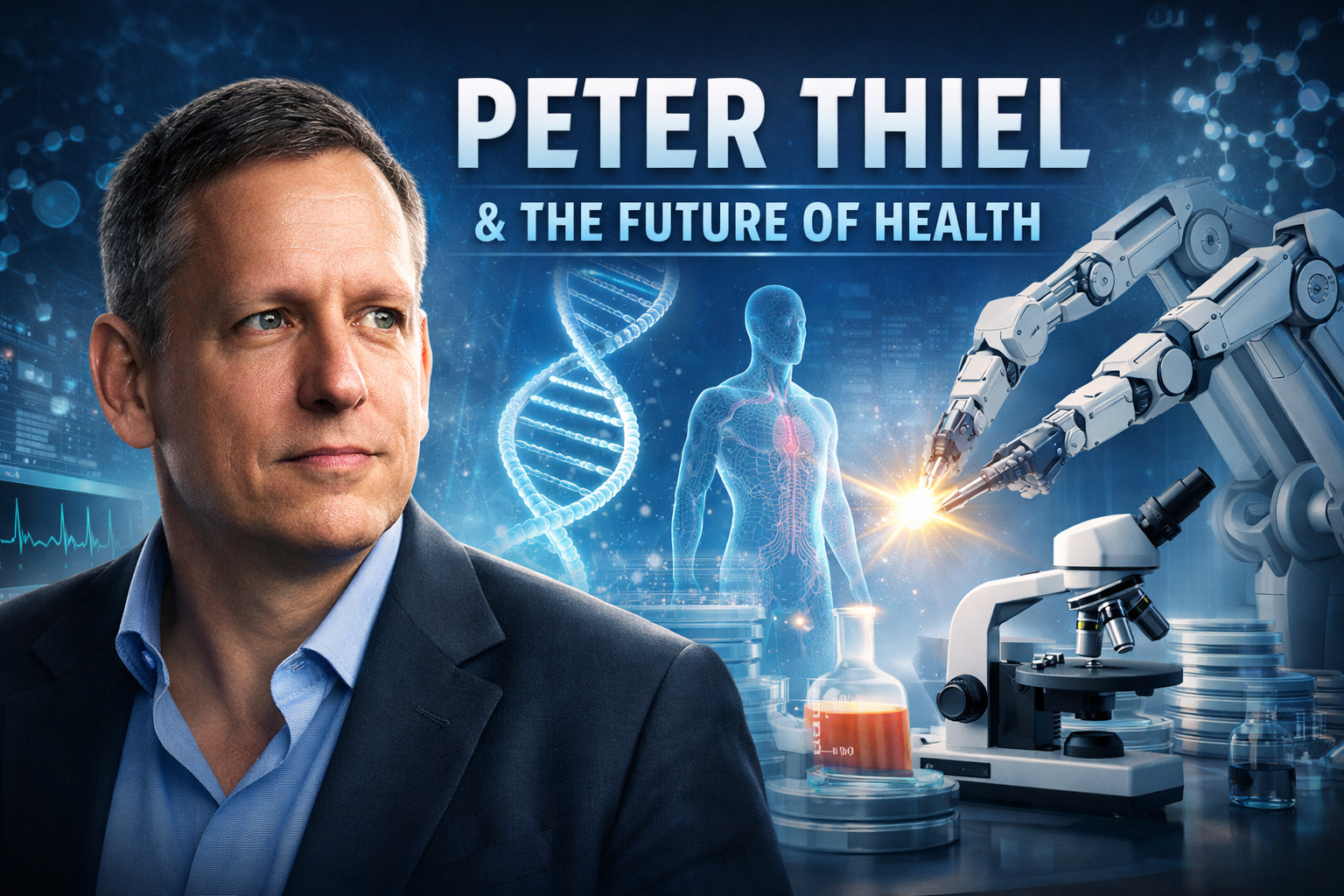
When people hear the name Peter Thiel, they often think of Silicon Valley, PayPal, venture capital, and controversial tech opinions. But behind the headlines and political debates, Thiel has quietly become one of the most influential figures in modern healthcare, longevity research, biotechnology, and human life extension.
Unlike traditional healthcare investors, Peter Thiel approaches medicine like a tech entrepreneur—questioning assumptions, funding radical ideas, and pushing boundaries that mainstream institutions often avoid. His involvement in biotech startups, anti-aging research, artificial intelligence in medicine, and futuristic healthcare models has sparked both excitement and controversy.
In this comprehensive blog post, we’ll explore:
-
Who Peter Thiel is and why he matters
-
His philosophy on health, aging, and human longevity
-
His investments in biotech and healthcare startups
-
How Thiel is influencing the future of medicine
-
Ethical concerns and criticisms
-
What his work means for the future of human health
Who Is Peter Thiel? A Brief Background
Peter Thiel is a German-American entrepreneur, investor, and author best known as:
-
Co-founder of PayPal
-
Early investor in Facebook
-
Founder of Palantir Technologies
-
Co-founder of venture capital firm Founders Fund
-
Author of Zero to One
Born in 1967, Thiel studied philosophy and law at Stanford University. His intellectual background heavily influences his unconventional thinking, especially in areas like technology, politics, and human biology.
While many billionaires focus on philanthropy, Thiel has focused on transformational technological progress, including life sciences and health innovation.
Peter Thiel’s Philosophy on Health and Aging
Aging as a Disease
One of Thiel’s most radical beliefs is that aging should be treated as a disease, not an inevitable process.
He has publicly stated that modern society accepts aging too easily and that scientific progress should aim to extend healthy human lifespan dramatically.
This idea aligns with the emerging field of longevity science, which studies:
-
Cellular aging
-
DNA damage
-
Senescence (aging cells)
-
Telomeres
-
Regenerative medicine
Thiel believes that extending life is not just possible—it is morally necessary.
Health as a Technological Problem
Unlike traditional healthcare approaches that focus on incremental improvements, Thiel views health as a technological frontier similar to computing or space exploration.
His key belief:
“We should solve biology like we solved software.”
This mindset has led him to fund companies working on:
-
Artificial intelligence for medical diagnosis
-
Genetic engineering
-
Personalized medicine
-
Radical anti-aging therapies
Peter Thiel’s Major Investments in Health and Biotech
Peter Thiel has invested hundreds of millions of dollars into biotech and healthcare companies through Founders Fund, personal ventures, and other funds.
Let’s explore some of the most influential ones.
1. Unity Biotechnology – Targeting Aging Cells
Unity Biotechnology is one of the most famous Thiel-backed longevity companies.
What They Do
Unity focuses on senolytics, drugs that remove senescent cells (old, dysfunctional cells that contribute to aging and disease).
Why It Matters
Senescent cells are linked to:
-
Arthritis
-
Heart disease
-
Alzheimer’s
-
Cancer
-
Frailty
Removing these cells could dramatically improve lifespan and healthspan.
2. Modern Meadow – Bioengineered Materials
While not strictly healthcare, Modern Meadow works on biofabrication, including lab-grown collagen and tissues.
This technology could:
-
Improve wound healing
-
Create artificial skin
-
Reduce reliance on animal tissues
-
Revolutionize organ repair
3. Halcyon Molecular – DNA Sequencing Innovation
Halcyon Molecular aimed to create faster, cheaper, and more accurate DNA sequencing technologies.
Why It Matters
DNA sequencing is the foundation of:
-
Personalized medicine
-
Genetic disease prevention
-
Cancer treatment
-
Pharmacogenomics
4. Ambrosia – Controversial Young Blood Experiments
One of the most controversial Thiel-backed projects involved young blood transfusions.
The Idea
Studies in mice suggested that transfusing young blood into older animals could rejuvenate tissues.
Ambrosia explored this idea in humans, sparking ethical debates and FDA warnings.
5. Artificial Intelligence in Healthcare
Thiel has supported AI-driven healthcare startups, including companies working on:
-
Medical imaging diagnostics
-
Predictive health analytics
-
AI drug discovery
-
Personalized treatment plans
AI in medicine could:
-
Detect diseases earlier
-
Reduce misdiagnosis
-
Lower healthcare costs
-
Improve treatment outcomes
Peter Thiel and Longevity Research
Funding Life Extension Science
Thiel has donated millions to:
-
The Methuselah Foundation
-
Longevity research institutes
-
Cryonics organizations
His goal is not just to treat disease, but to defeat biological aging entirely.
Cryonics and Immortality Interests
Peter Thiel has openly expressed interest in cryonics, the practice of freezing bodies or brains after death in hopes of future revival.
While controversial, cryonics reflects his belief that:
-
Death is a technological problem
-
Future science may reverse aging and death
The Thiel Fellowship and Health Innovation
Peter Thiel founded the Thiel Fellowship, which pays young innovators $100,000 to skip college and build startups.
Many fellowship projects focus on:
-
Biotech
-
Neuroscience
-
Health technology
-
Genetic engineering
This program aims to accelerate breakthroughs by supporting unconventional thinkers.
How Peter Thiel Is Shaping the Future of Healthcare
1. Radical Innovation vs. Incremental Progress
Traditional healthcare evolves slowly due to:
-
Regulations
-
Risk aversion
-
Institutional inertia
Thiel pushes for bold, high-risk, high-reward breakthroughs.
2. Personalized Medicine
Thiel-backed companies support the shift from one-size-fits-all medicine to:
-
DNA-based treatments
-
Precision drugs
-
Tailored therapies
3. AI-Driven Healthcare Systems
He believes AI will:
-
Replace routine medical tasks
-
Enhance doctors’ decision-making
-
Predict diseases before symptoms appear
4. Regenerative Medicine
Thiel supports research in:
-
Stem cells
-
Tissue regeneration
-
Organ engineering
This could eliminate the organ donor shortage and revolutionize surgery.
Ethical Concerns and Criticisms
Peter Thiel’s approach to health innovation is not without controversy.
1. Inequality in Healthcare
Critics argue that Thiel’s longevity research could create a world where:
-
The wealthy live significantly longer
-
The poor lack access to advanced treatments
This raises ethical questions about health equity.
2. Experimental and Risky Science
Some of Thiel’s funded projects, like young blood transfusions, have been criticized for:
-
Lack of evidence
-
Ethical concerns
-
Potential exploitation
3. Political and Social Controversies
Thiel’s political views often overshadow his healthcare contributions, leading some to distrust his motivations.
Peter Thiel’s Vision of a Post-Aging Society
Living Beyond 120 Years
Thiel believes humans should live far longer than current lifespans.
Imagine a world where:
-
People live 150–200 years
-
Chronic diseases are cured
-
Aging is slowed or reversed
-
Careers span centuries
Economic and Social Impact
Extended lifespans would transform:
-
Retirement systems
-
Healthcare costs
-
Education
-
Family structures
-
Population growth
Lessons from Peter Thiel for Health Entrepreneurs
1. Think Exponentially
Thiel encourages thinking beyond incremental improvements. Instead of improving a drug by 10%, aim to eliminate the disease entirely.
2. Challenge Assumptions
Healthcare has many entrenched assumptions, such as:
-
Aging is inevitable
-
Some diseases are incurable
-
Human lifespan has a fixed limit
Thiel challenges these ideas.
3. Combine Tech and Biology
Future healthcare lies at the intersection of:
-
AI
-
Genetics
-
Robotics
-
Nanotechnology
-
Data science
Peter Thiel’s Influence on Global Health Trends
Rise of Longevity Startups
Thiel’s investments have helped create a boom in:
-
Anti-aging biotech startups
-
Longevity venture capital funds
-
Life extension research labs
Mainstream Acceptance of Anti-Aging Science
What was once fringe science is now mainstream:
-
Major universities study aging
-
Big pharma invests in longevity drugs
-
Governments fund aging research
Health Tech vs. Traditional Healthcare
| Traditional Healthcare | Thiel-Style Health Tech |
|---|---|
| Incremental improvement | Radical innovation |
| Reactive treatment | Preventive and predictive |
| Doctor-centered | AI + data-driven |
| One-size-fits-all | Personalized medicine |
Future Predictions: Where Peter Thiel’s Health Vision Is Heading
1. AI Doctors
AI systems may diagnose and treat patients faster and more accurately than human doctors.
2. Genetic Editing for Disease Prevention
CRISPR and gene therapy could eliminate genetic diseases before birth.
3. Anti-Aging Drugs
Drugs that slow or reverse aging could become as common as vaccines.
4. Brain Enhancement and Neurotech
Thiel has shown interest in neuroscience, which could lead to cognitive enhancement technologies.
Public Perception of Peter Thiel in Health
Public opinion is divided:
Supporters Say:
-
He funds bold science
-
He accelerates progress
-
He challenges outdated systems
Critics Say:
-
His projects benefit elites
-
Some ideas are unethical
-
He bypasses regulations
Peter Thiel vs Other Tech Billionaires in Health
Peter Thiel vs Bill Gates
-
Gates focuses on global health, vaccines, and infectious diseases
-
Thiel focuses on longevity and radical biotech
Peter Thiel vs Elon Musk
-
Musk focuses on brain-computer interfaces and AI
-
Thiel focuses on longevity, biotech, and health tech startups
Peter Thiel vs Jeff Bezos
-
Bezos invests in longevity startups like Altos Labs
-
Thiel has been funding longevity research for decades
SEO FAQs About Peter Thiel and Health
Is Peter Thiel involved in healthcare?
Yes. He invests heavily in biotech, longevity research, AI medicine, and regenerative technologies.
Does Peter Thiel want to live forever?
He has expressed interest in life extension and cryonics, suggesting he believes death is a technological problem.
What companies has Peter Thiel invested in for health?
Unity Biotechnology, Halcyon Molecular, AI health startups, and longevity research organizations.
Is Peter Thiel anti-aging research legitimate?
Some research is legitimate and promising, but some projects are experimental and controversial.
The Future of Health According to Peter Thiel
Peter Thiel envisions a future where:
-
Diseases like cancer and Alzheimer’s are cured
-
Aging is reversible
-
Humans live significantly longer
-
AI manages healthcare systems
-
Personalized medicine is standard
This future is ambitious, controversial, and potentially transformative.
Conclusion: Why Peter Thiel Is a Key Figure in Modern Health Innovation
Peter Thiel is not a doctor, scientist, or traditional healthcare leader. Yet, his influence on the future of health may rival that of major pharmaceutical companies and governments.
By funding radical biotech startups, supporting longevity science, and challenging the idea that aging is inevitable, Thiel is pushing humanity toward a new era of medicine.
Whether his vision becomes reality or remains science fiction, one thing is certain:
Peter Thiel has permanently changed how the world thinks about health, aging, and human potential.