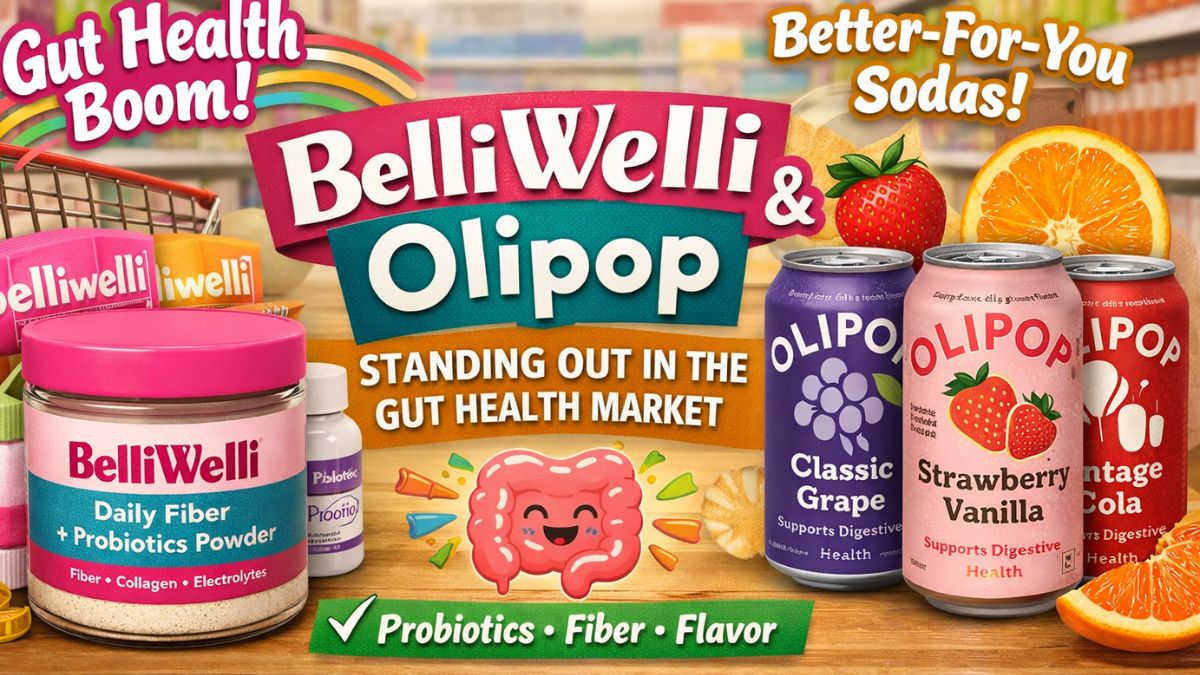
The gut health industry is booming, and grocery store shelves are filling up with products promising better digestion, improved wellness, and overall health benefits. Amid this surge of new products, brands like BelliWelli and Olipop have managed to capture consumers’ attention and build loyal followings.
Their success isn’t accidental. It comes from a careful mix of smart marketing, appealing packaging, and a deep understanding of what modern consumers actually want from health products.
The Rise of BelliWelli
Earlier this year, BelliWelli introduced its Daily Fiber and Probiotics Powder in more than 1,100 Walmart stores across the United States. The response was overwhelming. The product sold out within just two weeks, helping the company achieve an impressive 890% year-over-year increase in sales.
But instead of celebrating and moving on, the company decided to tweak its strategy even further. On its next generation of packaging, BelliWelli plans to make the word “fiber” much more prominent.
According to co-founder and CEO Katie Wilson, fiber is something most people recognize as important—even if they cannot always explain exactly why.
Many consumers have heard repeatedly that they should include more fiber in their diets. However, few truly understand its benefits for digestion, metabolism, and overall gut health. By highlighting this single, familiar ingredient, BelliWelli helps simplify the health message for shoppers.
A New Era of Gut Health Products
The gut health category has expanded rapidly in recent years. What once focused mainly on remedies for stomach discomfort or constipation has evolved into a broader wellness movement centered on digestive balance.
Many companies are now entering the market with creative solutions, including:
-
Fiber and probiotic powders
-
Functional beverages
-
Fermented foods
-
Prebiotic sodas
-
Gut-friendly snack bars
BelliWelli itself originally gained popularity through snack bars before expanding into powdered supplements that combine fiber, collagen, electrolytes, and probiotics. The brand positions its products as convenient tools for improving digestion and overall gut motility.
Other companies are also experiencing strong growth. Functional beverage brand Blume has seen impressive success with its product Superbelly, generating around $1.8 million in sales and recently expanding into Sprouts stores. Meanwhile, Cleveland Kitchen has introduced Kimchi Pickles in Walmart, emphasizing the digestive benefits of fermented foods.
In the beverage sector, competition is even more intense. Poppi has invested heavily in advertising, reportedly spending $43 million in marketing during the first four months of 2024 alone. At the same time, Olipop continues to expand its range of prebiotic sodas with new flavors and product formats.
Consumer Demand Is Driving the Boom
The growing popularity of gut health products reflects a broader shift in how consumers view wellness.
In the past, digestive health was mainly associated with medical treatments or supplements. Products like Metamucil, first developed in the 1930s, focused primarily on addressing constipation.
Today’s consumers, however, are thinking more holistically about digestive health.
A 2024 wellness survey conducted by McKinsey found that over 80% of consumers in China, the United Kingdom, and the United States consider gut health to be important.
This shift has created enormous opportunities for companies offering products that promise improved digestion, energy levels, and overall well-being.
But entering the market is not enough. With so many products claiming similar benefits, brands must find creative ways to stand out.
Messaging Matters More Than Ever
One of the biggest challenges for gut health brands is communicating their value clearly.
Simply labeling a product as “good for gut health” is no longer enough. Consumers want to understand the specific benefits they will receive.
Successful brands are therefore moving beyond vague wellness claims and highlighting targeted benefits such as:
-
Reduced bloating
-
Better hydration
-
Increased energy
-
Improved digestion
-
Feeling fuller between meals
Katie Wilson compares this strategy to the skincare industry. In skincare, products are rarely marketed simply as “good for skin.” Instead, they target specific issues like acne, dryness, wrinkles, or dark spots.
Gut health products are now following a similar path by focusing on specific digestive or wellness concerns.
According to Wilson, generic gut health branding rarely succeeds. Companies must identify a specific need and speak directly to it.
The Power of Eye-Catching Packaging
Packaging also plays a crucial role in attracting customers.
BelliWelli products are instantly recognizable thanks to their bright hot-pink lids and bold design. On crowded supermarket shelves, this colorful approach makes the brand hard to miss.
The design reflects the company’s playful tone and helps position digestive health products as fun rather than clinical.
This shift in visual identity is important because many consumers still associate digestive health products with medicine cabinets rather than snack aisles.
By using friendly colors and approachable branding, companies help remove the stigma that once surrounded digestive remedies.
Flavor Still Matters
Even the most innovative health product will struggle if it doesn’t taste good.
Modern consumers want products that provide health benefits without sacrificing flavor. This is particularly true in categories like beverages and snack foods, where enjoyment plays a major role in purchasing decisions.
For this reason, many gut health brands invest heavily in developing flavors that appeal to mainstream tastes.
Rather than positioning their products as supplements, they present them as enjoyable foods or drinks that also happen to support digestion.
Social Media Marketing Drives Awareness
BelliWelli has also achieved remarkable success through social media marketing, particularly on TikTok.
In just 16 days, the brand generated around 49 million views across its TikTok content.
Many of these videos feature CEO Katie Wilson herself. Wearing a bright pink BelliWelli shirt, she visits Walmart stores and speaks directly with customers who are purchasing the product.
These candid conversations create authentic content that resonates with viewers. Instead of polished advertisements, audiences see real shoppers sharing honest opinions about the product.
This approach has helped BelliWelli build a relatable brand personality while significantly increasing awareness.
Olipop’s Strategy: A Healthier Soda
While BelliWelli focuses on fiber supplements, Olipop has found success in the functional beverage market.
Olipop produces sodas that contain prebiotics, plant fiber, and ingredients designed to support digestive health. The company positions its drinks as healthier alternatives to traditional soda.
Marketing consultant Eleanor Hayden, whose firm has worked with Olipop campaigns, believes one key to the brand’s success is its emphasis on enjoyment.
Consumers want healthier choices, but they rarely want to abandon their favorite habits.
Olipop offers a compromise. It allows people to drink soda while feeling better about the health impact.
In other words, the product improves the experience without requiring a major lifestyle change.
A Rapidly Growing Business
Olipop’s strategy appears to be working.
The company, which is only about six years old, is reportedly on track to reach $500 million in annual sales, according to Bloomberg.
To maintain momentum, the brand continues introducing new flavors and product innovations. One upcoming flavor is expected to launch later this year.
The company has also expanded its distribution channels. While its beverages traditionally required refrigeration, Olipop recently introduced shelf-stable multipacks that are now appearing in stores such as H-E-B, Walmart, and Meijer.
This move makes the product easier to transport and store, opening new opportunities for retail growth.
Legacy Brands Are Adapting Too
The gut health boom has not gone unnoticed by established food companies.
Some legacy brands are rebranding their products to align with modern wellness trends.
One example is Mariani Packaging Company, a family-owned dried fruit producer. Around 2018, the company redesigned the packaging for its prunes and introduced a new label: Probiotic Prunes.
The results were striking.
The rebranded product achieved a compound annual growth rate (CAGR) of 12.1%, compared to just 7.9% for traditional prunes without the probiotic label.
According to company president George Sousa Jr., it quickly became the most successful product launch in the company’s history.
Overcoming the Stigma
Part of the success came from removing the stigma traditionally associated with prunes.
For decades, prunes were strongly linked with constipation relief, which made them less appealing to many consumers.
By reframing the product as a probiotic food that supports gut health, the company changed how shoppers perceive it.
Sousa explains that if people looked only at the nutritional benefits—without the old stereotypes—they would likely consider prunes one of the healthiest foods available.
The updated branding helped introduce the product to new audiences, including younger adults and parents interested in overall wellness.
The Future of Gut Health Products
As consumer interest in wellness continues to grow, the gut health market is expected to expand even further.
Brands that succeed will likely share several key characteristics:
-
Clear messaging about specific health benefits
-
Attractive and approachable packaging
-
Delicious flavors that encourage repeat purchases
-
Strong social media engagement
-
Products that improve health without requiring major lifestyle changes
Consumers are increasingly embracing the idea that food can function as medicine. Rather than relying solely on supplements, many people now prefer foods and beverages that support their health naturally.
This trend gives innovative brands an opportunity to thrive—especially those that can balance science, flavor, and smart marketing.
Final Thoughts
The rapid growth of gut health products reflects a major shift in consumer behavior. People are becoming more aware of how digestion influences overall health, energy levels, and well-being.
Brands like BelliWelli and Olipop have tapped into this trend by making gut health accessible, enjoyable, and easy to understand.
By combining clear messaging, bold packaging, engaging marketing, and products that genuinely appeal to consumers, these companies have carved out a strong presence in a crowded marketplace.
As the wellness movement continues to evolve, gut health brands that prioritize authenticity and innovation will likely remain at the forefront of this rapidly expanding industry.